
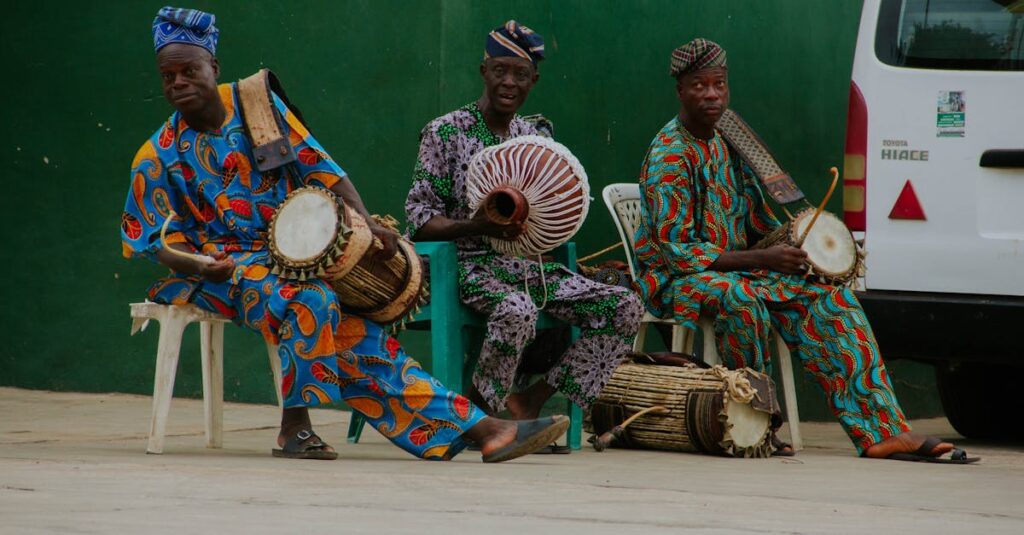
If you’ve ever looked into Nigeria, you already know it’s a giant when it comes to population. Over 200 million people call it home. But here’s something that surprises most people: Nigeria has over 500 languages.
Yes, 500.
That’s not a typo. Walk a few miles in some parts of the country, and the language people speak in the next village might be completely different from the last. So when someone asks, “What is the most widely spoken language in Nigeria?” it’s not a simple one-word answer.
But let’s get straight to it.
The Short Answer
Hausa is the most widely spoken language in Nigeria.
But before you close the tab, hold on. Because “most widely spoken” doesn’t always mean “most native speakers.” And that’s where things get interesting.
Hausa is spoken by roughly 50 to 60 million people in Nigeria. That includes both native speakers and people who learn it as a second language. And that second part matters a lot.
Let me explain why.
Hausa – The Lingua Franca of the North
Hausa originally comes from northern Nigeria. But over time, it spread like wildfire. Why? Trade.
For centuries, Hausa was the language of commerce across West Africa. Caravans moved goods like leather, cloth, and salt, and Hausa was the common tongue that made deals happen. That history stuck.
Today, you’ll hear Hausa not just in the north, but in northern cities across the country. Even in places like Lagos (far south), you’ll find Hausa speakers. Many northerners move south for work, and they bring their language with them.
But here’s the kicker: Hausa is also widely spoken in Niger, Ghana, Chad, Cameroon, and even Sudan. It’s a regional powerhouse.
So when we say “most widely spoken,” Hausa wins because it stretches across geographical and ethnic lines. You can travel from Kano to Kaduna to Katsina, then cross into Niger, and still get by with Hausa.
But What About Yoruba and Igbo?
Good question. Because Yoruba and Igbo are huge too.
Yoruba has around 40 million speakers, mostly in the southwest. Think Lagos, Oyo, Ogun, Osun states. Yoruba is rich in culture, music, and art. If you listen to Afrobeats, you’ve probably heard Yoruba phrases without even knowing it.
Igbo follows with roughly 30 million speakers, mainly in the southeast. Igbo people are known for their entrepreneurial spirit. Walk into any electronics market in Lagos, and chances are the seller speaks Igbo.
So why aren’t they number one?
Because unlike Hausa, Yoruba and Igbo haven’t spread as widely as second languages. Most people who speak Yoruba or Igbo learned them at home. Outsiders rarely pick them up unless they move into those regions.
Hausa, on the other hand, is often the bridge language. A Yoruba trader doing business in the north will likely learn basic Hausa before a Hausa trader learns Yoruba.
That’s the difference.
Wait – What About English?
Ah. Now we need to talk about the elephant in the room.
English is Nigeria’s official language. It’s the language of government, schools, courts, and most formal media. If you write a letter to a government office, you write it in English. University lectures? English. National newspapers? English.
So why isn’t English the answer?
Because “most widely spoken” usually refers to indigenous languages in everyday conversations. English is spoken by a large number of Nigerians as a second language – estimates range from 50 to 80 million people. That’s huge.
But here’s the catch: fluency levels vary widely. Many Nigerians speak a local version of English (sometimes called “Nigerian English”) mixed with local words and grammar. And outside of cities, English drops off fast.
In rural villages, especially in the north, Hausa dominates. In southwest villages, Yoruba. In the southeast, Igbo.
So if you’re asking about the language you’ll hear most often in markets, on the streets, and in daily life outside official settings – Hausa takes the crown.
Breaking It Down by Numbers
Let me give you a rough picture (sources like Ethnologue and local census data):
| Language | Estimated Speakers in Nigeria |
|---|---|
| Hausa | 50–60 million (native + L2) |
| Yoruba | 40 million (mostly native) |
| Igbo | 30 million (mostly native) |
| English | 50–80 million (as L2, varies) |
| Fulfulde | 15 million |
| Kanuri | 10 million |
| Tiv | 5 million |
These numbers aren’t perfect – Nigeria hasn’t had a reliable census on language in decades. But they give you the right order.
Hausa is number one.
Why Does This Matter?
You might be wondering, “Okay, but why should I care?”
Fair question. Here’s why understanding Nigeria’s language landscape matters, especially if you’re doing business, traveling, or creating content.
For business: If you’re targeting the Nigerian market, don’t just assume English is enough. It is for the elite and urban populations. But to reach everyday people – traders, farmers, local shop owners – you need local languages. Hausa alone covers nearly a third of the population. Pair it with Yoruba and Igbo, and you’re talking to over 70% of Nigerians.
For travel: If you’re visiting Lagos, English and Yoruba will serve you well. Go to Kano, and Hausa becomes essential. Basic phrases like “Sannu” (hello in Hausa) or “Ba ni jin Hausa” (I don’t understand Hausa) go a long way.
For content creators: YouTube videos, podcasts, or social media content in Hausa reach an enormous audience that English content misses. The same goes for Yoruba and Igbo. Don’t sleep on them.
A Quick Word on Pidgin
I can’t ignore Nigerian Pidgin English. It’s not an official language, and it’s not the most widely spoken in terms of numbers, but it’s growing fast.
Pidgin is the street language of Lagos, Port Harcourt, Warri, and many urban centers. It’s English mixed with local words, simplified grammar, and a rhythm all its own.
How many speak it? Estimates range from 30 to over 100 million, depending on how you define “speak.” Some argue Pidgin is actually more widely understood than Hausa in the south. But because it’s not standardized and often not counted separately from English, it’s hard to say.
What’s clear is that Pidgin is the real “unofficial” national language for many Nigerians. If you want to sound like a local anywhere from Lagos to Abuja, learn Pidgin.
Common Misconceptions
Let me clear up a few things I often hear.
“Igbo is the most widely spoken because Igbo people travel everywhere.”
True, Igbo people are incredibly mobile. You’ll find them in every corner of Nigeria. But that doesn’t mean their language spreads the same way. Many Igbo speakers in mixed settings switch to English or Pidgin rather than expect others to learn Igbo.
“Yoruba has the most native speakers.”
No, that’s Hausa. Yoruba native speakers might be close to Hausa native speakers, but Hausa has far more second-language speakers.
“Everyone in Nigeria speaks English.”
Far from it. In rural areas, especially among older people and those with less formal education, English is not common. Nigeria’s literacy rate is around 60-70%, and that’s in English. Literacy in local languages is much lower because schools teach in English.
Practical Takeaways
So here’s what you actually need to remember:
- Hausa is the most widely spoken language in Nigeria when counting total speakers (native + second language).
- Yoruba and Igbo are the next two major players. Together with Hausa, they form the “big three.”
- English is the official language but not the most widely spoken in daily, informal life.
- Pidgin is the wildcard – hugely popular in cities, especially the south.
If someone asks you this question in a quiz or a conversation, the safe answer is Hausa. But the real answer is more interesting: Nigeria doesn’t have one dominant language. It has several, each powerful in its own region, and they all coexist in a beautiful, noisy, chaotic mix.
Frequently Asked Questions
Is Hausa spoken outside Nigeria?
Yes. Hausa is widely spoken in Niger, Ghana, Chad, Cameroon, Sudan, and even in parts of Ivory Coast and Burkina Faso. It’s one of the most spoken African languages overall.
Which language should I learn if I’m moving to Nigeria?
It depends where you’re going.
- Lagos / Southwest: Yoruba or Pidgin
- Kano / Kaduna / North: Hausa
- Enugu / Owerri / Southeast: Igbo
- Abuja (capital): English works fine, but Pidgin helps
Is it possible to live in Nigeria speaking only English?
In major cities, yes. In rural areas, you’ll struggle. And even in cities, local languages give you better deals in markets, warmer interactions, and deeper respect.
How many languages does Nigeria really have?
Ethnologue lists 525 languages. Of those, 522 are living languages. Seven are extinct. It’s one of the most linguistically diverse countries on Earth.
What’s the easiest Nigerian language to learn for an English speaker?
Probably Hausa. It has simpler grammar than Yoruba or Igbo, which are tonal languages (meaning pitch changes word meanings). Hausa has tones too, but they’re less critical for basic understanding.
Final Thoughts
Languages in Nigeria aren’t just ways to talk. They’re identities, histories, and maps of how people moved and traded and married across centuries. Hausa rose to the top not through conquest, but through commerce. It became the language of the market, the caravan, and the mosque.
That’s still true today. Walk through the bustling Kurmi Market in Kano or the sprawling Onitsha Market in the southeast, and you’ll hear Hausa weaving through the noise. Not everyone speaks it natively, but enough people speak it enough to get the job done.
That’s what “most widely spoken” really means. It’s not about who has the most proud native speakers. It’s about who can talk to the most neighbors.
So here’s my question for you: If you had to pick one Nigerian language to learn for a month-long trip across the country – Hausa, Yoruba, Igbo, or Pidgin – which one would you choose and why?
Drop your answer in the comments. I’m genuinely curious.
