
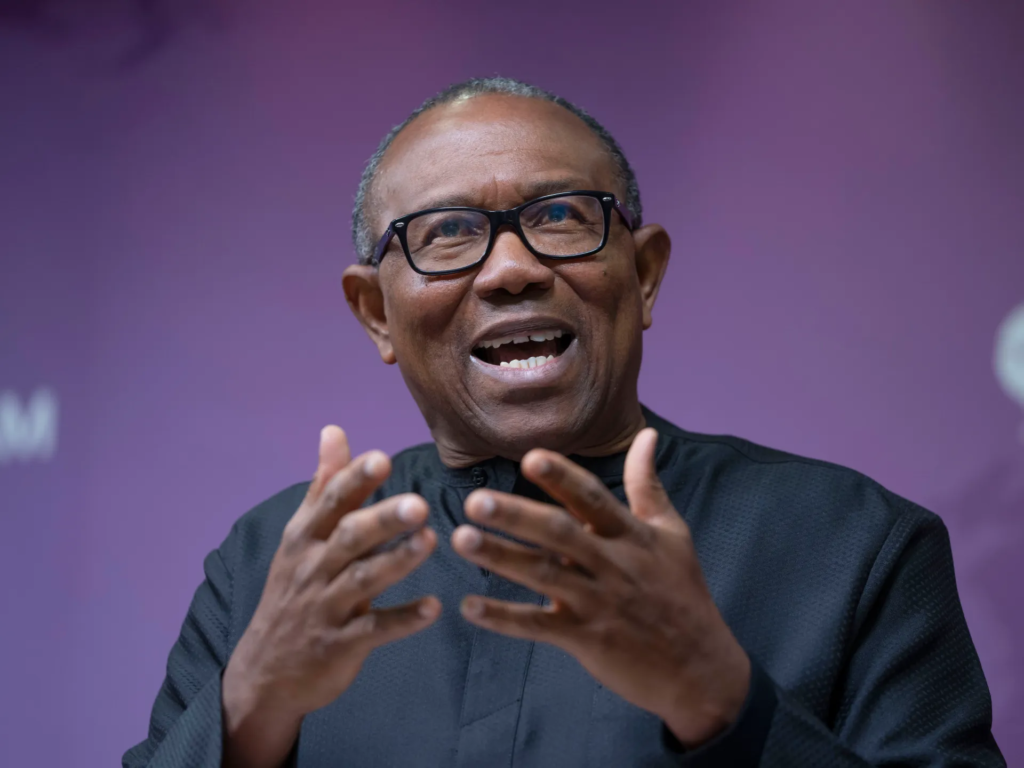
The political temperature across Nigeria is rising earlier than usual. Even though the next general election is still ahead in 2027, top political strategists, analysts, and advocacy groups are already working behind the scenes. Among the loudest voices making major headlines right now is the G100 group. This prominent political collective has issued a bold and direct message to key opposition figures across the country: if you want to win in 2027, you must come together and form a single, unified front.
The statement specifically points to heavyweights across different political camps. It calls on former Vice President Atiku Abubakar, 2023 Labour Party presidential candidate Peter Obi, former Senate President David Mark, Oyo State Governor Seyi Makinde, and former Bayelsa State Governor Senator Seriake Dickson, along with several other key political figures. The core argument from the G100 is simple and grounded in numbers. As long as these influential leaders stay in separate political corners, defeating the ruling party will remain an uphill task.
Here at WhatsBuzzN, we keep a close watch on trending national issues to break down complex stories so they are easy for everyone to understand. Political strategy often comes with heavy language and complicated mechanics, but the math behind elections is straightforward. In this article, we look at why the G100 is making this call right now, who these leaders are, the obstacles standing in their way, and what a united opposition could mean for everyday Nigerian voters.
Understanding the G100 Call for Unity
The G100 is an influential gathering of political stakeholders, policy thinkers, and community advocates. Their recent public statement was not a quiet suggestion whispered in private offices. It was a firm public call to action, widely reported across major national news organizations like Vanguard News.
The main idea behind the G100 declaration comes down to fundamental political arithmetic. In a democratic system, political power depends on raw vote totals. When the political opposition divides its strength across three, four, or five different political parties, it splits the total pool of opposition voters. That division allows a single, organized ruling party to secure victory, even if a majority of total voters across the nation wanted a change.
The $0 Secret To Launching Your Entire Online Empire
Why pay hundreds every month for separate software? Build funnels, send emails, and make sales with Systeme.io completely free.
Get Started For $0Free Forever • No Credit Card Needed • Beginner-Friendly
According to the G100, the leaders of today’s opposition must set aside personal political ego and look at the bigger picture. The group is urging representatives from the Peoples Democratic Party (PDP), the Labour Party (LP), and other political factions to sit around a single table. Their proposed goal is to build a powerful mega political party or alliance before the campaign season for 2027 gets into full swing.
The group also highlighted that timing is everything. Setting up a solid political coalition is not something that can be rushed in a few weeks. It takes months, or even years, of negotiating policy structures, agreeing on leadership setups, and settling differences between regional bases. Waiting until a few months before the election in 2027 would simply be too late to build genuine trust among voters.
The Lessons of 2023: Why the Opposition Came Up Short
To truly understand why groups like the G100 are so active right now, we have to look back at the events of the 2023 presidential election. The official election results published by the Independent National Electoral Commission (INEC) offer a very clear picture of what happens when an opposition is divided.
In the 2023 election, the ruling All Progressives Congress (APC) won the presidency. However, an analysis of the total votes cast shows that the combined vote count of the leading opposition candidates was higher than the winning vote total.
Atiku Abubakar ran under the PDP flag and secured millions of votes across northern and southern states. Peter Obi campaigned under the Labour Party banner, creating a massive wave of support among urban voters, young citizens, and the Southeast. Rabiu Kwankwaso led the New Nigeria Peoples Party (NNPP) and captured a huge vote share in Kano State. On top of that, internal friction within the PDP—most notably from the G5 governors group, which included Governor Seyi Makinde—further fractured party strength.
Because these candidates ran separate campaigns, voters who desired a new direction split their ballots among multiple choices. The end result was a classic divide-and-conquer scenario. The G100 is warning that if these same leaders repeat the same approach in 2027, the outcome on election night will likely be the exact same.
Spotlight on the Key Leaders Called to Action
The G100 specifically highlighted several high-profile political figures in their appeal. Each of these leaders brings a distinct voter base, strong political experience, and unique regional influence to the table. Understanding their current roles helps explain why their cooperation is so critical.
Atiku Abubakar: The Experienced Veteran
Atiku Abubakar remains one of the most recognizable names in Nigerian political history. Having served as Vice President from 1999 to 2007, he possesses an extensive network that extends into nearly every local government area in the country. His deep roots in the North and long-standing presence in national politics make him a major factor in any election discussion. At the same time, commentators note that after multiple presidential bids, uniting younger voters behind his candidacy requires careful strategy.
Peter Obi: The Voice of the Youth Movement
Peter Obi completely reshaped traditional political expectations during the 2023 election cycle. Running on the Labour Party ticket, he mobilized millions of citizens, particularly young Nigerians, professionals, and voters seeking economic reforms. His message focused on reducing governance costs, fighting waste, and turning Nigeria into a production-focused economy. For any multi-party coalition to gain credibility with the general public, winning over Obi’s energized base is essential.
David Mark: The Unifying Elder Statesman
Senator David Mark is respected across party lines as a steady mediator and experienced statesman. Having served as President of the Senate for eight consecutive years, he understands legislative compromise and complex political negotiations better than most. The G100 views David Mark as an ideal figure to help build bridges, calm internal disputes, and guide talks between veteran party figures and younger leaders.
Seyi Makinde: The Influential Southern Governor
Seyi Makinde is currently serving his second term as Governor of Oyo State and stands out as one of the most prominent leaders in Southwestern politics. Known for his developmental projects and independent political choices, Makinde has proven that he can command significant respect across regional lines. As an active member of the former G5 group, his support and organizational capacity in the Southwest are vital for any broad political movement.
Seriake Dickson: The South-South Powerhouse
Senator Seriake Dickson brings years of executive and legislative experience to the conversation. Having served as a two-term Governor of Bayelsa State and now representing his constituency in the Senate, Dickson holds deep roots across the Niger Delta. His involvement ensures that the views, interests, and economic concerns of the South-South region are strongly represented in any national coalition setup.
Can Big Egos and Personal Ambitions Actually Merge?
While a unified opposition sounds great in public discussions, putting it into practice is a very difficult challenge. Nigerian political history shows that forming a stable multi-party coalition requires stepping past major political and personal hurdles.
The biggest challenge in any proposed merger is deciding who leads the ticket. Both Atiku Abubakar and Peter Obi ran as presidential candidates in the last election and believe they have what it takes to lead the country. Asking either of them—or any other major contender—to step back, take a vice-presidential slot, or accept a supporting role requires immense personal sacrifice and political compromise.
Another major challenge involves regional balancing. Nigeria has an established, unwritten practice of balancing power between the Northern and Southern regions of the country. A united opposition party would need to construct a presidential ticket that respects this regional balance, making sure voters in all parts of the country feel properly represented.
Send, Spend & Hold Money Worldwide Without Hidden Fees
Transfer money internationally at the real exchange rate and hold 40+ currencies in one account.
Open a Wise AccountMid-market rate • Fast transfers • 40+ currencies
There is also the matter of combining different party structures and legal setups. The Labour Party movement, the traditional PDP organization, and other participating groups all have their own rules, internal guidelines, and operational habits. Merging these distinct groups into a single cohesive political machine demands careful legal work and agreement long before INEC deadlines arrive.
Historical Precedent: The 2013 Mega Merger
Is a major political merger actually possible in Nigeria? History shows us that the answer is yes, because a successful one has happened before.
Back in 2013, several distinct opposition parties came together to create a single political force known as the All Progressives Congress (APC). Prior to that merger, opposition parties were largely separated by region. The Action Congress of Nigeria (ACN) was strong in the Southwest, the Congress for Progressive Change (CPC) had deep support in the North, and the All Nigeria Peoples Party (ANPP) held key state strongholds.
Recognizing that they could not win individually, the leaders of these parties put aside their immediate differences and merged their organizations into one national party. That historic effort resulted in a victory during the 2015 presidential election, marking the first time in Nigerian history that an incumbent ruling party was defeated at the ballot box.
The G100 is essentially pointing today’s opposition leaders back to that 2013 playbook. They argue that the same principles that made the APC successful in 2015 can work for a newly structured opposition today, provided the leaders involved demonstrate similar discipline and willingness to compromise. Political reporting from outlets like Premium Times frequently highlights how these past political alliances continue to shape current electoral strategy.
What a United Opposition Means for Everyday Citizens
Why should ordinary citizens care about high-level political talks and coalition negotiations? The answer is simple: a balanced political system directly impacts governance and daily life.
When one political party dominates without a strong challenger, public accountability can decline. Government policies may be passed without thorough debate, and officials might feel less pressure to deliver on promises.
A strong, unified opposition creates a competitive environment. It forces the government in power to stay focused, work harder, and respond quickly to the needs of the public. For citizens going to the polls, a united opposition offers a clear, realistic alternative rather than a fragmented selection of choices where votes end up scattered.
Furthermore, a well-structured coalition allows political leaders to present clear economic proposals. From managing inflation and food costs to improving security and public services, a competitive election encourages all political sides to put forward practical solutions that benefit the nation as a whole.
Tech, Social Media, and the Future of Campaigns
The road to the 2027 elections will not rely solely on traditional rallies and state-level town hall meetings. Modern campaigns are increasingly shaped across digital platforms and online communities.
The $0 Secret To Launching Your Entire Online Empire
Why pay hundreds every month for separate software? Build funnels, send emails, and make sales with Systeme.io completely free.
Get Started For $0Free Forever • No Credit Card Needed • Beginner-Friendly
Social media networks, instant messaging apps, and online video creation have become central tools for voter engagement across Nigeria. From young voters organizing community discussions to political updates spreading rapidly online, digital communication plays a huge role in how citizens form opinions and get involved.
Emerging digital tools are also changing how information is analyzed and distributed during election seasons. Political groups use data insights to understand local needs, while online platforms allow citizens to track policy promises directly. To learn more about how technological developments are reshaping modern communication, explore our collection of articles on Technology and AI.
At the same time, online video content and digital publishing enable independent creators to share political updates and educational breakdown videos faster than ever before. If you want to understand how modern media channels build audiences and share timely updates online, take a look at our helpful guide on YouTube Automation.
Frequently Asked Questions (FAQs)
Why is the G100 group urging political leaders to unite for 2027?
The G100 believes that a divided opposition splits voter support across multiple candidates, making it much easier for the ruling party to secure victory. By encouraging leaders like Atiku, Obi, Mark, Makinde, and Dickson to join forces, they hope to build a single, competitive alternative for voters in 2027.
Can Atiku Abubakar and Peter Obi work together on the same ticket again?
While both leaders worked together during the 2019 presidential election, uniting for 2027 will depend on their willingness to negotiate on leadership roles. Deciding who heads the ticket and who takes a secondary role remains one of the main questions for any proposed coalition.
What role do current state governors like Seyi Makinde play in national coalitions?
Sitting governors hold major influence because they lead state political networks, command organizational resources, and maintain direct contact with local voters. Leaders like Seyi Makinde are essential for organizing grassroots support across entire regions.
Has a major opposition party merger ever succeeded in Nigeria?
Yes. In 2013, several main opposition parties merged to form the APC, which went on to win the 2015 general election. This event proved that a well-organized multi-party coalition can successfully win a national election in Nigeria.
How can I stay updated on political news and national trends?
You can follow regular updates right here on our blog, browse our curated news sections, or reach out to our team directly through our Contact Page.
Moving Forward to 2027
The call by the G100 group marks an early start to what promises to be an eventful political journey leading into 2027. Whether figures like Atiku Abubakar, Peter Obi, David Mark, Seyi Makinde, and Seriake Dickson can align their political strategies into a shared movement will be one of the most important stories to follow in the coming years.
Building an effective alliance requires open communication, long-term planning, and a shared commitment to public service above personal ambition. As political discussions continue among different camps, voters across the country will be watching closely to see if a true coalition forms or if the opposition remains divided when election day arrives.
What are your thoughts on the call for a united opposition in 2027? Stay connected with us and join the conversation on our official social channels:
- Follow us on Instagram
- Like our page on Facebook
- Join the discussion on X (Twitter)
