
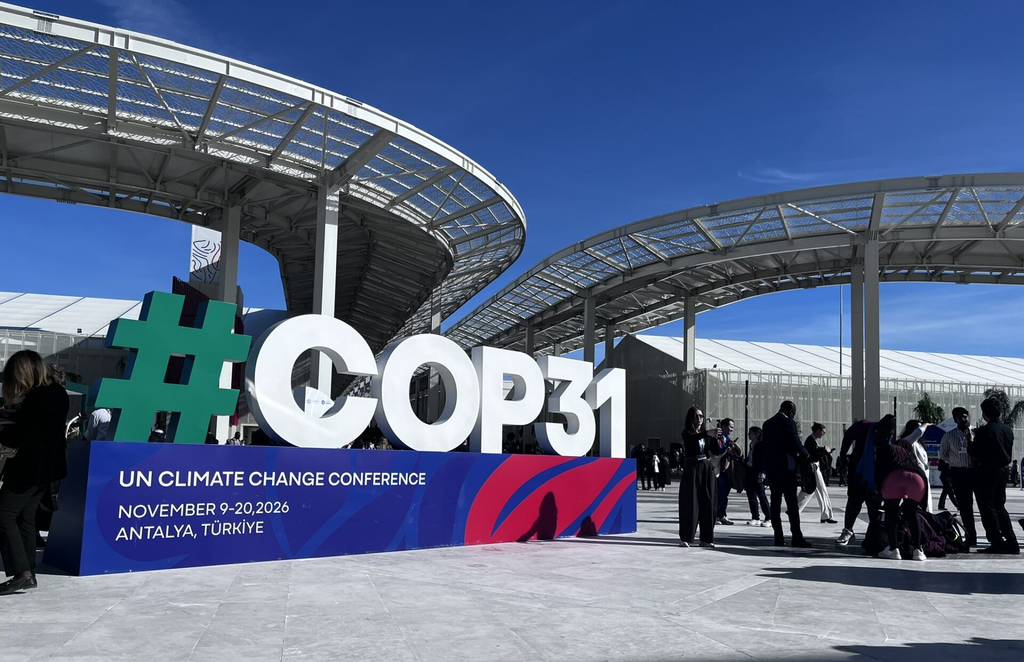
After two grueling weeks of closed-door arguments and nearly two full days of sleepless overtime, the world’s biggest climate summit ended in total failure. On Sunday, November 22, 2026, negotiators from nearly 200 countries walked out of the United Nations COP31 climate conference in Antalya, Turkey, without signing a main global agreement.
The breakdown happened over one central issue that nobody could agree on: what to say about fossil fuels. Oil-producing nations fought hard to keep coal, oil, and gas out of the final document, while European countries and vulnerable island states refused to sign a climate deal that ignored the main cause of global warming.
It is the first time U.N. climate talks have completely failed to reach an overarching deal since the infamous Copenhagen summit back in 2009. As extreme weather events continue to batter communities around the globe, this diplomatic crash leaves major questions about how the world plans to slow down rising temperatures.
What Actually Happened at the U.N. Climate Talks in Turkey?
The 31st U.N. Climate Change Conference, widely known as COP31, officially began on November 9, 2026, in the sunny coastal resort city of Antalya, Turkey. Delegates were supposed to wrap up their work and sign a final agreement by Friday, November 20.
Instead, the talks dragged on for more than 49 hours past the deadline, turning COP31 into the longest climate summit in United Nations history. Exhausted diplomats slept on couches, missed flights home, and argued through the night as the Turkish and Australian leaders running the summit tried to find a compromise.
The $0 Secret To Launching Your Entire Online Empire
Why pay hundreds every month for separate software? Build funnels, send emails, and make sales with Systeme.io completely free.
Get Started For $0Free Forever • No Credit Card Needed • Beginner-Friendly
By Sunday afternoon, it became clear that no compromise was possible. In a chaotic final meeting, COP31 President Murat Kurum, who is Turkey’s environment minister, was not even in the room when the proposed agreement fell apart. Elchin Allahverdiyev of Azerbaijan had to step in to announce that the deal had failed.
Kurum later returned to bang the gavel and officially close the conference without a main agreement, known in U.N. terms as a “cover decision”. As reported by CBC News, Kurum told the room that the hosts had done everything possible and that no new draft would be written.
Why Did the Words “Fossil Fuels” Vanish From the Final Draft?
To understand why everyone was so angry, you have to look at how the official text changed over the final week of the summit. At COP28 in Dubai back in 2023, countries made history by agreeing for the very first time to “transition away from fossil fuels” in energy systems.
When the COP31 leadership released its first draft agreement on Monday, November 16, 2026, it included clear language calling on nations to speed up that shift away from fossil fuels. Many countries saw that early draft as a solid starting point.
However, as the week went on, the wording started to disappear. By the time the final 10-page draft was presented on Sunday morning, the words “fossil,” “oil,” “coal,” and “phase out” had been completely deleted from the text.
The document simply mentioned the 2023 Dubai deal in passing without ever naming the actual fuels driving climate change. According to PBS NewsHour, Russia and Saudi Arabia led the push to strip every mention of fossil fuels out of the final agreement.
How Did Oil-Producing Nations and Vulnerable Countries Clash Behind Closed Doors?
U.N. climate conferences operate on a rule of near-unanimous consensus. That means nearly 200 nations have to agree on the exact wording of a deal, and even a small group of countries can block the entire process.
In Antalya, that rule created a massive standoff between countries that rely on selling oil and gas and nations that are already suffering the worst effects of a warming planet.
Why Did the European Union and Island Nations Walk Away?
Around 130 countries had come to Turkey demanding a clear roadmap to phase out fossil fuels. When they saw that the final draft erased fossil fuels altogether, they drew a hard line and refused to accept it.
The 27-nation European Union led the rejection alongside countries like Panama, Norway, Tuvalu, the Marshall Islands, and Vanuatu. Speaking on behalf of the EU, Ireland’s climate minister Darragh O’Brien said it was “unconscionable” to pass a climate agreement that makes zero reference to fossil fuels.
Small island nations, which face the literal threat of disappearing under rising oceans, were just as firm. Tuvalu’s Climate Minister Maina Talia called the omission a “red line” and reminded reporters that fossil fuels are the root cause of the entire crisis.
What Role Did Saudi Arabia and Russia Play in Blocking the Deal?
On the other side of the negotiating table, major oil and gas exporters argued that the world still needs fossil fuels to keep economies running and lights on. Saudi Arabia and Russia pushed hard against any language that would force them to wind down their primary exports.
Their resistance frustrated many delegates who felt the talks were being held back by oil interests. Panama’s Environment Minister Juan Carlos Navarro did not hold back during a press conference, accusing the summit of being “held hostage by the petroleum mafia”.
Navarro argued that oil producers had convinced the world that stalling climate action was somehow good for everyone, adding simply that science does not negotiate and the planet cannot wait.
Why Were Activists So Angry About Carbon Capture Technologies?
To make matters worse, the final draft did not just delete fossil fuel targets—it also added new goals for industrial carbon capture and storage. The proposed text called for massive, gigatonne-scale deployment of carbon capture technology by 2035.
Send, Spend & Hold Money Worldwide Without Hidden Fees
Transfer money internationally at the real exchange rate and hold 40+ currencies in one account.
Open a Wise AccountMid-market rate • Fast transfers • 40+ currencies
Carbon capture involves trapping carbon emissions from factories or power plants and burying them underground. While oil-producing countries love this technology because it lets them keep pumping oil and gas, climate scientists and activists see it very differently.
Environmental groups warned that writing strict targets for carbon capture into the deal while deleting targets to cut fossil fuels was a dangerous distraction. As The Independent noted, critics argued that relying on unproven, expensive carbon capture systems gives big polluters an excuse to keep burning fossil fuels instead of switching to clean energy.
What Happened to the $120 Billion Promised to Developing Countries?
Fossil fuels were not the only reason delegates left Antalya feeling betrayed. Money—specifically funding to help poorer nations survive extreme weather—was another huge flashpoint.
Developing nations across Africa, Asia, and Latin America contribute the least to global carbon emissions, yet they suffer the worst damage from deadly floods, droughts, and heat waves. According to estimates from the U.N. Environment Programme, developing countries will need roughly $305 billion every year by 2035 just to adapt to climate change.
In the early draft released on November 16, the COP31 leadership proposed setting a target for wealthy nations to triple adaptation finance to at least $120 billion a year by 2035. Even though $120 billion was less than half of what scientists say is needed, African negotiators and developing nations saw it as a concrete number they could take home.
By two o’clock on Sunday morning, that $120 billion target had vanished from the text. In its place, negotiators inserted a vague promise to write a technical report and discuss funding options again at COP32 in November 2027.
As detailed by Global Issues, removing that financial commitment left developing countries with empty hands and no clear guarantee of help when climate disasters strike.
How Did Global Politics and the U.S. Absence Shape This Breakdown?
Climate talks never happen in a bubble, and the political climate in late 2026 made reaching a deal much harder than usual.
First, the biggest empty chair in Antalya belonged to the United States. For the second year in a row, the U.S.—the world’s second-largest emitter of greenhouse gases—sent no official delegation to the summit after President Donald Trump pulled the country out of the 2015 Paris Climate Agreement. Without American diplomats in the room to push for compromises or back up European allies, the balance of power shifted heavily toward oil-producing states.
Second, global energy markets were already rattled by a major energy price shock caused by the war in Iran. When oil and gas prices jump, governments become nervous about promising to phase out fossil fuels, fearing voter backlash over high fuel and electricity bills.
The $0 Secret To Launching Your Entire Online Empire
Why pay hundreds every month for separate software? Build funnels, send emails, and make sales with Systeme.io completely free.
Get Started For $0Free Forever • No Credit Card Needed • Beginner-Friendly
All of this unfolded just weeks after an October 2026 U.N. report confirmed that the planet is on track to blow past the 1.5 degrees Celsius warming limit set under the 2015 Paris Agreement. Global temperatures have already risen to roughly 1.4 degrees Celsius above pre-industrial levels, and a strong El Niño weather pattern is making heat waves and storms even worse.
What Are World Leaders and Scientists Saying About the Failure?
Reaction to the collapse in Antalya was swift, emotional, and unusually blunt. Few leaders tried to sugarcoat what happened.
U.N. Secretary-General Antonio Guterres issued a statement expressing his deep disappointment and frustration. As quoted by CBS News, Guterres reminded governments that politics cannot change physics, noting that while there may be no consensus in the negotiating room, there is zero ambiguity in the science.
Australia’s Climate Minister Chris Bowen, who co-led the negotiations alongside Turkey, admitted the outcome was “disappointing, very disappointing”. Still, Bowen tried to end on a hopeful note, insisting that the 2023 Dubai agreement remains valid and that the real-world shift toward renewable energy is already moving fast and cannot be reversed.
Others were far harsher:
- Former U.S. Vice President Al Gore called the collapse an outrage, arguing it is unacceptable that a handful of petrostates hold veto power over any mention of fossil fuels.
- Rachel Cleetus of the Union of Concerned Scientists blamed richer nations, oil-producing states, and what she called the poor leadership of the Turkish and Australian presidents.
- Youth representative Oumnia Anfer spoke directly to the diplomats in the hall, telling them simply that they had let young people down.
- Tasneem Essop, executive director of Climate Action Network International, pointed out that the final text offered nothing to protect ordinary people or support the priorities of the Global South.
How Does This Collapse Affect Everyday People Around the World?
When diplomats argue over single words in a 10-page U.N. document, it can feel disconnected from daily life. In reality, the failure of COP31 hits everyday families in very practical ways.
First, without stronger global commitments to move away from oil and gas, economies remain exposed to sudden fuel price spikes whenever wars or supply disruptions hit. When energy costs rise, everything from public transport to grocery bills gets more expensive.
Second, the removal of the $120 billion adaptation finance goal means slower help for farmers, coastal towns, and cities trying to prepare for extreme weather. Building stronger flood barriers, upgrading power grids, and helping farmers grow drought-resistant crops all require serious money.
Finally, a weak global signal slows down private investment in clean energy. Solar and wind power have become much cheaper in recent years, yet big banks and energy companies still look to U.N. climate deals to know how fast governments will enforce clean energy rules.
What Are the Most Frequently Asked Questions About the COP31 Collapse?
If you are trying to make sense of all the headlines coming out of Turkey, here are quick, honest answers to the biggest questions people are asking.
Did Any Part of the COP31 Climate Summit Succeed?
Yes, a few smaller, technical decisions moved forward during the two weeks in Antalya. For example, countries made progress on ocean conservation efforts aimed at protecting 30 percent of the world’s oceans by 2030, and negotiators discussed plans to expand global electrification. However, because the main overarching cover decision was rejected, those smaller steps carry far less political weight than a unified global pact.
Does the COP31 Failure Cancel the 2023 Dubai Fossil Fuel Agreement?
No, it does not cancel it. The historic agreement reached at COP28 in Dubai, where nations agreed to transition away from fossil fuels, is still officially on the books. The problem is that COP31 failed to build on that promise or create an action plan to make it happen faster.
Why Can a Few Countries Block a Deal Supported by Over 100 Nations?
Under United Nations climate rules, major decisions require consensus rather than a simple majority vote. While this rule was originally designed to make sure every country feels heard, critics say it now gives oil-rich nations an easy way to stall progress. Following the breakdown in Antalya, several leaders, including Panama’s environment minister, called for urgent reforms to how U.N. climate talks are run.
When and Where Is the Next U.N. Climate Summit Happening?
The next major U.N. climate conference, COP32, is scheduled to take place in November 2027. Many of the unresolved fights from Turkey—including the debate over climate adaptation funding and how to keep the 1.5 degrees Celsius temperature goal alive—have been pushed onto the COP32 agenda.
Where Does the World Go From Here After the COP31 Breakdown?
The collapse of COP31 in Antalya is a sobering wake-up call. As reported by The National, the mood in the final hours was bitter, with frustrated delegates questioning whether the current U.N. system can still deliver results in a deeply divided world.
Even without a signed piece of paper from Turkey, the push for cleaner energy is not stopping. Cities, businesses, renewable energy innovators, and individual nations can still choose to invest in solar, wind, and cleaner grids on their own. Still, having global leaders fail to agree on the basic cause of climate change is a major setback at a moment when the planet has zero time to waste.
