
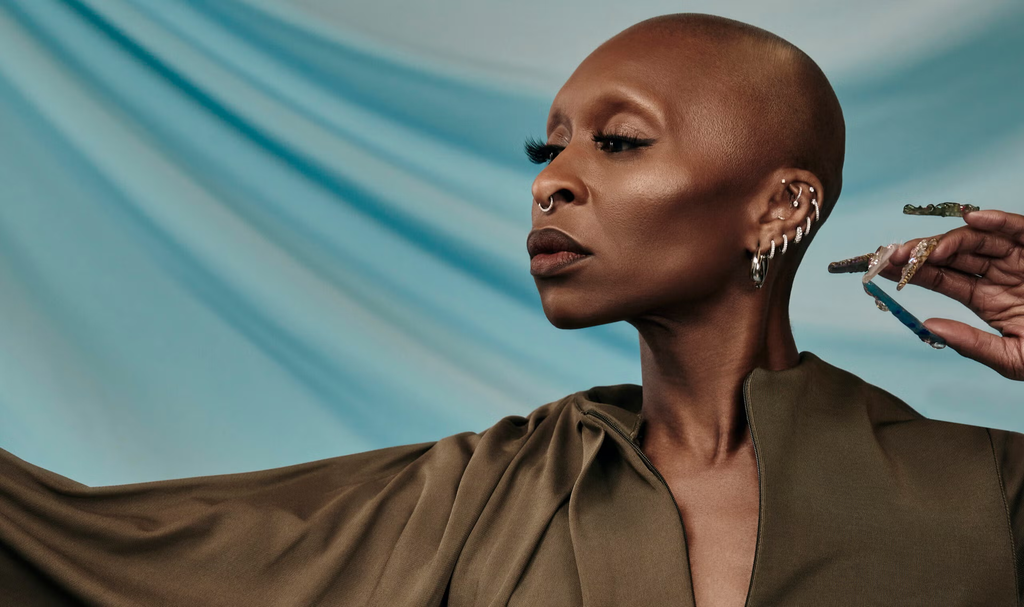
Cynthia Erivo has spent months preparing audiences around the globe for her role as Elphaba in Universal Pictures’ cinematic adaptation of the musical Wicked. People expected stunning vocals, emotional drama, and breathtaking special effects. Nobody expected the Broadway superstar to swap the magical Land of Oz for the chaotic energy of a vintage Lagos living room, but that is exactly what happened when the British-Nigerian powerhouse turned the fantasy classic into an unforgettable Nollywood melodrama.
The sketch took social media by storm within minutes of airing. Viewers across the United Kingdom, Nigeria, and the broader African diaspora found themselves hit by a wave of nostalgia, sharp satire, and pure comedic brilliance. Instead of flying broomsticks and serious Broadway drama, audiences were treated to dramatic claps, intense organ stings, spiritual warfare, and family accusations that looked like they were ripped straight out of an early 2000s home video cassette.
The parody proved one thing beyond doubt: Cynthia Erivo knows her audience, understands her roots, and knows how to deliver comedy with pinpoint precision.
When Oz Meets Old-School Nigerian Cinema
The premise of the sketch is simple yet hilarious. What if the magical conflict between Elphaba, the green-skinned Wicked Witch of the West, and Glinda the Good was written, directed, and produced in the heart of Surulere during the golden era of direct-to-video Nigerian films?
In the original story of Wicked, Elphaba is an misunderstood outsider who faces prejudice because she was born with emerald-green skin. In the parody, that tragic backstory gets an immediate Nollywood makeover. Her green skin is no longer a whimsical fairy-tale mystery. Instead, it is treated as clear, undisputed evidence of a generational spiritual attack from her father’s village.
The $0 Secret To Launching Your Entire Online Empire
Why pay hundreds every month for separate software? Build funnels, send emails, and make sales with Systeme.io completely free.
Get Started For $0Free Forever • No Credit Card Needed • Beginner-Friendly
From the opening frames, the visual language nails the unmistakable aesthetic of old-school Nollywood. The production recreates the low-budget charm that defined West African cinema at the turn of the millennium. The lighting is harsh, the camera zooms into actors’ faces at lightning speed, and the dramatic sound effects do heavy lifting throughout the scene.
When Elphaba enters the room, the camera does not pan gracefully. It jerks violently three times in rapid succession, accompanied by the iconic cinematic crash sound that every Nigerian child can recognize in their sleep.
Breakdown of the Parody: Witchcraft, Deliverance, and Village Enemies
The sketch opens with Cynthia Erivo dressed in an exaggerated version of Elphaba’s black gown, combined with vibrant West African fabrics and a dramatic head wrap. She does not carry a spell book. Instead, she holds court in a lavishly decorated parlor filled with gold-trimmed furniture, plastic-covered sofas, and oversized framed portraits on the wall.
The Confrontation with Glinda
Enter Glinda, who is completely reimagined as a wealthy, self-righteous church aunty. Clad in an extravagant pink lace gown with matching jewelry, she does not float down in a magical bubble. She storms into the parlor clapping her hands in rhythmic disapproval, flanked by concerned relatives and church elders.
Glinda does not ask Elphaba why she has turned against the Wizard. Instead, she points a dramatic finger directly at Elphaba’s forehead and asks the question that has anchored hundreds of Nigerian family dramas: “Sister Elphaba, who did you offend in your village that your whole body has turned green like bitter leaf?”
The dialogue flies fast and thick with authentic West African cadence. Erivo matches the energy effortlessly. Rather than singing about defying gravity, she defends herself with passionate hand gestures, dramatic eye rolls, and the classic Nollywood hand-on-hip stance that signals trouble is brewing.
The Deliverance Session
No Nollywood witchcraft story is complete without an attempt at spiritual intervention. The parody escalates when Glinda decides that words are no longer enough to save her sister. A pastor brandishing a bottle of anointing oil suddenly bursts through the parlor doors, shouting declarations against the spirits of the forest.
What follows is an all-out spiritual warfare session. Characters dive across the living room carpet, extras fall under the anointing in slow motion, and Erivo wails in righteous indignation while dodging splashes of holy water.
The climax flips the iconic musical number “Defying Gravity” completely on its head. Instead of levitating toward the sky to claim her personal power, Elphaba begins stomping her feet in classic praise-and-worship cadence. The majestic Broadway orchestration is replaced with energetic keyboard presets, heavy basslines, and call-and-response choruses that sound like a Sunday morning service in Ikeja.
Just when the drama reaches a boiling point, the sketch cuts abruptly to black with bold white text across the screen: “End of Part 1. Watch Out for Part 2 and Part 3.”
Cynthia Erivo and Her Authentic Connection to Nigerian Culture
Part of what makes this parody land so effectively is that it never feels like cheap mockery from an outsider looking in. It feels like an affectionate inside joke crafted by someone who grew up watching these exact movies on Saturday afternoons.
Cynthia Chinasaokwu Onyedinmanasu Melvil Erivo was born in South London to Nigerian parents. Long before she captured an Emmy, a Grammy, and a Tony Award, she grew up immersed in the rich cultural traditions of the Nigerian diaspora. She knows the cadence of the language, the body language of an upset West African mother, and the exact tone of voice used when someone is offering unsolicited spiritual advice.
Her portrayal avoids lazy stereotyping. Instead, it leans directly into the specific comedic beats that make Nigerian storytelling beloved worldwide. Her accent is crisp and accurate, shifting effortlessly between sharp London diction and rapid-fire Nigerian-English phrasing. The small physical details—the way she sucks her teeth, adjusts her wrapper, and clicks her fingers—show a deep familiarity with the material.
Watching an actress who has walked the red carpets of Cannes and the Oscars jump whole-heartedly into classic home-video slapstick created a sense of shared joy for fans who rarely see their specific cultural media parodied on mainstream television.
The Timeless Appeal of Nollywood Tropes
The success of the sketch highlights the global influence of Nigerian film culture. Over the past three decades, Nollywood grew from an informal direct-to-video industry into the second-largest film industry in the world by volume, as documented by organizations like UNESCO.
Send, Spend & Hold Money Worldwide Without Hidden Fees
Transfer money internationally at the real exchange rate and hold 40+ currencies in one account.
Open a Wise AccountMid-market rate • Fast transfers • 40+ currencies
Even as modern Nigerian cinema transitions toward sleek cinema blockbusters streaming worldwide on platforms like Netflix, the vintage era continues to hold a special place in internet culture. Several distinct elements from that golden era made the Wicked spoof work so well.
1. The Power of Dramatic Sound Effects
In vintage Nigerian films, sound design was never subtle. If a character received bad news, the soundtrack did not gently swell. A booming drum crash rattled the speakers. If a secret was revealed, a synthesizer sting played three times while the camera zoomed in and out.
The parody uses these exact cues to punctuate every single line. When Elphaba explains that she was simply born green, the dramatic string sound effect hits with thunderous force, turning an innocent line of dialogue into an earth-shattering revelation.
2. The Living Room as a Battleground
In early Nigerian home videos, roughly eighty percent of all dramatic confrontations took place inside a single parlor. The living room was where wills were read, where marriages were ended, and where confessions were forced out of suspected witches.
By keeping the entire parody confined to a crowded parlor packed with relatives, the sketch captures that distinct feeling of claustrophobic family tension that made vintage Nollywood movies impossible to turn off.
3. The Unresolved Cliffhanger
Before the advent of streaming platforms, Nigerian movies were sold on physical VCD discs. Because of disc storage limits and commercial strategy, a single film was routinely broken up into multiple parts. A viewer would reach an intense emotional peak, only for the movie to cut off without warning, demanding that they buy Part 2 to see what happened next.
Ending the Wicked parody on an unresolved cliffhanger was the ultimate nod to fans who spent their childhoods hunting down scratched discs in local markets just to see how a storyline wrapped up.
The Cultural Rise of Wicked and Cynthia Erivo’s Elphaba
The timing of this sketch could not have been better. The Wicked movie represents one of the biggest cinematic releases of the decade. Originally created as a Broadway stage musical by Stephen Schwartz and Winnie Holzman, based on the novel by Gregory Maguire, the story has captivated theater audiences for over twenty years. More background on the production and history of the original stage show can be explored via Playbill.
Taking on the role of Elphaba is a massive responsibility. The character was originally made famous on stage by Idina Menzel, whose powerhouse vocals set an impossibly high standard. When Universal Pictures announced that Erivo would play the green witch alongside Ariana Grande as Glinda, anticipation reached a fever pitch.
Instead of keeping the promotional tour strictly formal, Erivo’s willingness to lean into cultural humor shows her versatility. She can belt out complex vocal arrangements on the biggest stages in the world, and in the very next breath, make millions of people laugh by parodying the eccentricities of her heritage.
The $0 Secret To Launching Your Entire Online Empire
Why pay hundreds every month for separate software? Build funnels, send emails, and make sales with Systeme.io completely free.
Get Started For $0Free Forever • No Credit Card Needed • Beginner-Friendly
Internet and Fan Reactions Across the Globe
As soon as the clip hit the web, social media platforms lit up with reactions from Lagos to London, Atlanta to Johannesburg. Clips shared across X, Instagram, and TikTok racked up millions of views within hours.
Many viewers expressed pure shock at how accurately the production captured old Nollywood mannerisms. Nigerian creators, comedians, and casual fans flooded comment sections with their favorite moments from the sketch.
Some of the most popular reactions centered around:
- The Accuracy of the Deliverance Scene: Viewers pointed out that the chaotic prayer routine felt entirely too familiar to anyone who had ever attended a revival service in West Africa.
- The Call for a Full Movie: Fans joked that Universal Pictures should scrap the standard theatrical release and instead release a four-part direct-to-video version sold exclusively in yellow plastic cases.
- Appreciation for Representation: Commenters highlighted how refreshing it was to see African cultural humor shared on an international platform without being watered down or explained away for foreign audiences.
The sketch demonstrated that cultural specificity does not limit an audience. When comedy is executed with passion, knowledge, and sharp timing, people from all backgrounds can appreciate the humor.
Why Diaspora Comedy Continues to Win the Internet
The viral success of Cynthia Erivo’s parody is part of a larger trend taking over global entertainment. For decades, Western comedy shows often struggled when attempting to reference African cultures, frequently relying on tired tropes or vague accents that missed the mark entirely.
Today, a new generation of British-African and African-American writers, comedians, and performers are stepping into the spotlight. They bring their lived experiences directly into the writers’ room.
When people who actually grew up in the culture write the jokes, the humor shifts from shallow caricature to rich, observational satire. The jokes celebrate the quirks, warmth, and theatricality of the culture while inviting everyone else along for the ride.
This sketch proved that you do not need to dilute your heritage to achieve mainstream viral success. By leaning fully into the specific tropes of Nigerian cinema, the parody became more distinct, memorable, and funny than a generic Hollywood parody ever could have been.
Frequently Asked Questions
What was the Cynthia Erivo Nollywood Wicked parody?
The parody was a comedy sketch featuring Cynthia Erivo that reimagined the plot and characters of the famous musical Wicked through the style, tropes, and dramatic conventions of early 2000s Nollywood cinema.
Is Cynthia Erivo actually of Nigerian descent?
Yes. Cynthia Erivo was born in London, England, to Nigerian parents. Her full name is Cynthia Chinasaokwu Onyedinmanasu Melvil Erivo, and she has frequently spoken about how her Nigerian heritage influences her life and artistic work.
Who does Cynthia Erivo play in the Wicked movie?
Cynthia Erivo stars as Elphaba Thropp, the green-skinned protagonist who eventually becomes known as the Wicked Witch of the West, starring opposite Ariana Grande as Glinda.
What is Nollywood?
Nollywood is the nickname for the Nigerian film industry. Originating with low-budget, direct-to-video releases in the 1990s, it has grown into one of the largest film industries on the planet, celebrated for its storytelling, high drama, and distinct cultural identity.
Why did the sketch use dramatic sound effects and fast zooms?
The fast zooms, dramatic crashes, and sudden synthesizer chords were signature production elements of vintage Nigerian home videos. Including them in the sketch was an intentional stylistic choice to authentically mimic classic African home entertainment.
Moments like this show how rich, funny, and interconnected modern global pop culture has become. Seeing an iconic Broadway musical get combined with the dramatic flair of Nigerian home video is the kind of creative cross-pollination that keeps entertainment fresh, surprising, and deeply enjoyable.
