
The military quiet between the United States and Iran has come to a sudden end after both countries exchanged direct strikes for the first time in a month. Tensions flared up rapidly across the Middle East following three days of military actions in and around the Strait of Hormuz and neighboring areas.
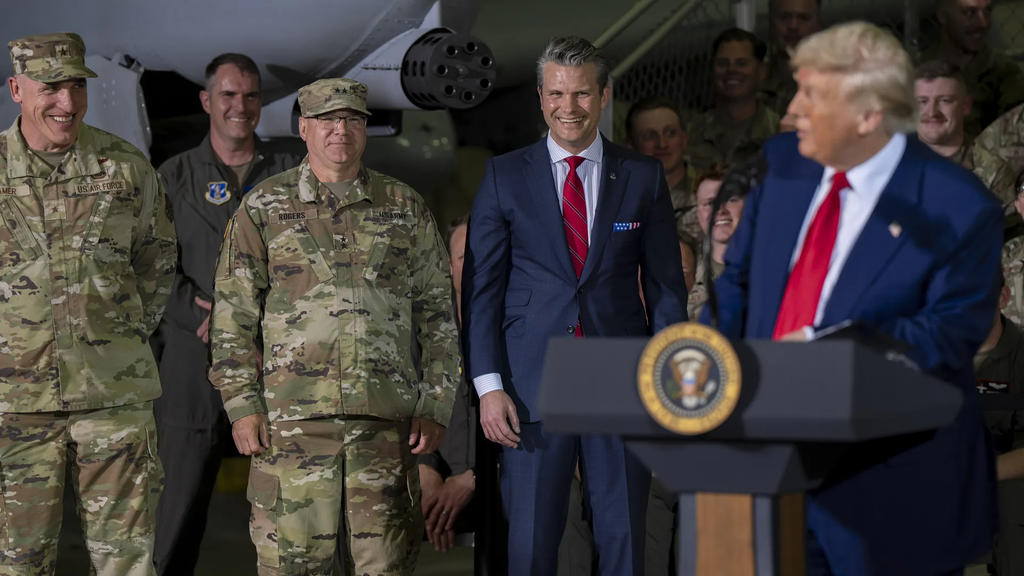
Despite the sudden rise in conflict, US President Donald Trump stated that he remains confident in the American stance, telling reporters that he likes the current position of the United States much better now.
This fresh exchange of fire ends a four-week period of relative calm where Washington had focused primarily on economic sanctions. The military actions quickly caught the attention of international observers, sending oil prices higher and raising fresh questions about stability in the region.
What Triggered the Latest Clash Between the US and Iran?
The initial spark in this new round of conflict occurred late Sunday when the United States military carried out targeted air strikes on Larak Island. Larak Island sits in a critical position near the Strait of Hormuz, a narrow waterway that handles a massive portion of the world’s daily oil shipments.
US Central Command stated that American forces acted after detecting Iranian preparations to deploy fresh naval mines in the strait. US aircraft and drones targeted Iranian missile launchers, radar installations, and equipment on the island to stop any attempt to block shipping lanes.
The $0 Secret To Launching Your Entire Online Empire
Why pay hundreds every month for separate software? Build funnels, send emails, and make sales with Systeme.io completely free.
Get Started For $0Free Forever • No Credit Card Needed • Beginner-Friendly
Iran responded quickly to the American strikes. Within hours, Iranian forces fired missiles and military drones at US bases located in Jordan. Iranian state media claimed the attacks were a direct answer to American aggression on Larak Island.
President Trump addressed the situation shortly after the attacks. He warned that if Iranian forces continue to launch retaliatory strikes, the United States will respond at a much harder level. At the same time, Trump made it clear that he views the military position of the United States as strong and advantageous despite the renewed exchanges.
Understanding the Strategic Importance of Larak Island and the Strait of Hormuz
To understand why this conflict matters so much, it helps to look at the map of global trade routes. The Strait of Hormuz is widely considered one of the most critical maritime choke points on Earth.
Why the Strait Matters to the Global Market
- Millions of barrels of crude oil pass through this narrow water channel every single day.
- A large percentage of liquefied natural gas used in Europe and Asia travels along this route.
- Any military disruption in the strait directly threatens the global supply of energy.
What Makes Larak Island Key
- Larak Island is located directly inside the Iranian territorial waters of the strait.
- It offers a prime strategic viewpoint for monitoring and controlling passing ships.
- Placing radar or missile systems on the island allows control over nearby shipping lanes.
When news broke that American forces targeted military hardware on Larak Island, energy traders across the globe paid immediate attention. Preventing any blockade of the strait remains a central priority for Washington and its global trade partners.
How Oil Prices and Global Markets Reacted
Financial markets reacted immediately as news of the strikes spread through major news outlets. Energy prices spike quickly whenever conflict touches the Middle East, and this event was no exception.
The Immediate Rise in Crude Oil
Brent crude oil, the global standard for pricing oil, surged by nearly 6 percent shortly after the attacks were confirmed. Prices quickly crossed $92 per barrel and approached $95 per barrel in international trading. Analysts note that as long as military actions continue near energy transit routes, oil prices will likely remain high.
Impact on Gas Stations and Transportation Costs
Higher crude oil prices eventually trickle down to everyday consumers. When crude oil costs more, refining companies pay more to make fuel. This leads to higher prices at gasoline pumps for everyday drivers. Shipping companies also pay higher prices for diesel, which can increase the cost of delivering goods to supermarket shelves.
Track real-time financial updates and learn how automated systems analyze complex market data by exploring our coverage of technology AI tools to see how modern technology helps track worldwide economic shifts.
The Shift from Sanctions Back to Military Strikes
For roughly four weeks prior to these strikes, the White House had been focusing on an intense economic pressure campaign. Treasury Secretary Scott Bessent announced expanding secondary sanctions aimed at isolating Iran from global banking networks. The goal was to force economic compliance without launching fresh missile strikes.
However, economic pressure alone did not completely halt military activities along the coast. US intelligence reports indicated that Iranian military units were still working to secure control over maritime passages. This led American military planners to recommend limited, targeted strikes against high-value equipment.
Defense officials described these operations as selective actions designed to reduce immediate threats without entering a full-scale regional war. Even so, switching from economic measures back to active missile trades shows how quickly situations can shift when major powers are involved.
Internal Leadership Changes in the US Military Structure
The military strike on Larak Island occurred alongside major internal changes within the United States military leadership.
Around the same time as these strikes, Army Secretary Dan Driscoll submitted his resignation. Driscoll had served in the role for 18 months, working closely with senior officials on modernizing military technology, expanding drone programs, and improving readiness.
In his farewell statement, Driscoll expressed deep gratitude for the opportunity to serve and praised the work of military personnel. Reports indicated that his resignation came after internal discussions regarding military transformation, defense leadership priorities, and force readiness during ongoing operations in the Middle East.
These shifts highlight the immense operational pressure facing military planners when managing defense initiatives, modernizing force structures, and responding to sudden international flare-ups at the same time.
Send, Spend & Hold Money Worldwide Without Hidden Fees
Transfer money internationally at the real exchange rate and hold 40+ currencies in one account.
Open a Wise AccountMid-market rate • Fast transfers • 40+ currencies
What Both Sides Are Saying Publicly
Both Washington and Tehran have issued clear statements following the military actions. The contrasting messages show how far apart the two governments remain on resolving the dispute.
The Position of the United States
President Donald Trump emphasized that American forces remain ready for any situation. His public comments highlighted several points:
- The United States has established strong leverage through both economic sanctions and military presence.
- American forces will act whenever necessary to defend open navigation in international waters.
- Further military actions from Iran will lead to stronger responses from Washington.
The Response from Iran
Iranian President Masoud Pezeshkian spoke about the strikes during an international visit. His statements reflected Tehran’s stance:
- Iran states that it does not seek an expanded war in the region.
- The Iranian government insists it will respond firmly to any direct military action on its territory.
- Leaders in Tehran accuse Washington of breaking diplomatic commitments and putting pressure on their local economy.
With both sides maintaining firm positions, analysts believe that finding common ground for negotiations will require significant diplomatic effort.
How News of Conflict Spreads on Modern Platforms
When major events happen across the world, people no longer wait for the evening news to find out what happened. Information moves across digital networks in a matter of seconds.
From video summaries on streaming platforms to fast commentary on social networks, everyday people get their breaking updates in real time. Modern independent creators and journalists play a massive role in breaking down these complex international events into simple explanations.
If you are interested in how modern creators use automated platforms to publish fast news updates and manage digital channels, check out our guide on YouTube automation practices to see how content is produced and shared today.
Domestic Political Reactions in the United States
Foreign policy events often become major topics of discussion inside domestic politics, especially during active political seasons.
Supporters of the administration argue that decisive military action is necessary to protect global shipping and keep foreign adversaries from controlling essential sea lanes. They view President Trump’s statement of liking the current military position as a sign of strength and confidence.
Critics, on the other hand, raise concerns about the risks of ongoing military exchanges. They point out that sustained instability can drive up inflation through higher gas prices, which directly affects American families. Members of Congress from various backgrounds continue to debate the balance between economic pressure, diplomacy, and direct military action.
The $0 Secret To Launching Your Entire Online Empire
Why pay hundreds every month for separate software? Build funnels, send emails, and make sales with Systeme.io completely free.
Get Started For $0Free Forever • No Credit Card Needed • Beginner-Friendly
What Could Happen Next in US-Iran Relations?
Looking ahead, experts see several possible paths that this conflict could take in the coming weeks and months.
Scenario 1: Continued Limited Strikes and Stalemates
Both countries may continue carrying out brief, limited military actions whenever specific threats arise. This pattern keeps the conflict contained to specific targets without escalating into full regional warfare. However, it keeps oil prices elevated and maintains constant tension along shipping lanes.
Scenario 2: Return to Economic Negotiations
If economic pressure continues to strain local resources and military costs rise, both sides may eventually look for pathways back to diplomatic talks. Finding an agreement would require addressing sanctions relief alongside marine security in the Strait of Hormuz.
Scenario 3: Higher Risk of Unintended Escalation
The biggest concern among security analysts is the risk of miscalculation. In high-tension environments, a single misdirected missile or unexpected casualty can lead to rapid escalation that neither side originally intended.
Frequently Asked Questions (FAQs)
Why did the US and Iran exchange strikes after a month of quiet?
The quiet period ended when American forces detected Iranian preparations to deploy new naval mines in the Strait of Hormuz. The US carried out targeted strikes on Larak Island to keep shipping lanes clear, prompting Iranian retaliatory strikes on US bases in Jordan.
What did President Trump mean when he said “I like our position”?
President Trump was expressing confidence in the military and economic leverage the United States holds. He believes that combined sanctions and targeted military readiness put Washington in a strong posture relative to Iran.
How do these strikes affect everyday people outside the Middle East?
The primary impact on everyday people comes through energy costs. Conflict near the Strait of Hormuz raises global crude oil prices, which can lead to higher gas prices at local gas stations and increased shipping costs for everyday goods.
Is full-scale war expected between the US and Iran?
While tensions are high, both nations have indicated that they are focusing on selective, targeted military actions rather than seeking an all-out war. However, military experts closely watch the situation because repeated exchanges carry a risk of further escalation.
Where can readers find more information about our blog and team?
You can discover more background on our writers and mission by reading our official about us overview page.
How can readers get in touch with questions or feedback?
If you have questions, comments, or news tips you want to share with our editorial team, visit our contact us portal to send us a message directly.
Where can readers follow social media updates for breaking news?
Stay connected with our latest updates, visual stories, and community discussions across our official social channels:
- Follow our daily updates on Instagram
- Join the conversation on Facebook
- Get quick news flashes on X (Twitter)
Navigating Complex Global Developments
The recent flare-up between the United States and Iran demonstrates how quickly international affairs can evolve. A single military action in a critical water passage can instantly influence worldwide financial markets, energy prices, and political debates across multiple continents.
President Donald Trump’s confidence in the stance of the United States underscores a strategy that blends military readiness with severe economic pressure. Meanwhile, the international community continues to watch the Strait of Hormuz closely, hoping that shipping lanes remain open and that diplomatic avenues can eventually reduce regional friction.
Staying informed about international events helps everyday citizens make sense of broader economic trends that impact daily life. Following clear, honest reporting ensures you remain aware of how choices made on the world stage affect energy markets, local economies, and global stability in the months ahead.
