
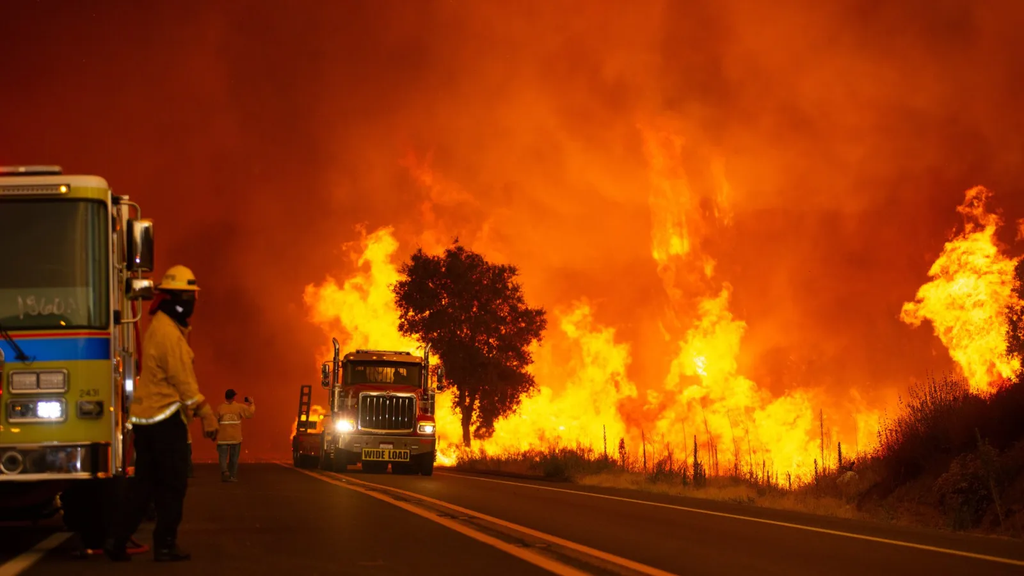
Powerful winds and unusually dry weather have fueled a fast-growing wildfire along California’s scenic coastline, forcing emergency officials to issue urgent evacuation orders for hundreds of homes and local communities. Flames have spread rapidly across rugged terrain near the ocean, sending huge plumes of thick smoke into the sky and closing major coastal roadways.
Fire crews are working around the clock to build containment lines, but strong shifting gusts and dense dry brush make it difficult to slow down the fire. Local authorities are urging everyone in affected zones to leave immediately and not wait until the last minute.
The situation remains dynamic as emergency responders battle difficult canyon terrain and changing wind directions. If you live anywhere near the affected coastal zones or plan to travel through the area, staying updated on real-time alerts is absolutely critical.
Fire Behavior and Current Coastline Emergency Conditions
Wildfires along the oceanfront present unique challenges for firefighters. While coastal areas often enjoy cooler air and ocean moisture, recent heat spikes and low humidity have turned coastal brush into dry fuel. When strong offshore breezes kick up, they push flames down narrow canyons toward populated areas and scenic highways.
The combination of steep coastal hills, dense brush, and gusty canyon winds creates extreme fire behavior. Dry brush that has not burned in decades ignites within seconds, creating intense heat that makes close-range firefighting nearly impossible. As embers travel up to a mile ahead of the main flame wall, small spot fires ignite in surrounding brush and neighborhoods, complicating control efforts across multiple fronts.
The $0 Secret To Launching Your Entire Online Empire
Why pay hundreds every month for separate software? Build funnels, send emails, and make sales with Systeme.io completely free.
Get Started For $0Free Forever • No Credit Card Needed • Beginner-Friendly
Aerial water drops and slurry bombers are playing a major role in the fight. Helicopters are scooping water directly from local reservoirs and ocean bays to drop on active hotspots along steep cliffs. Ground crews are using bulldozers and hand tools to clear vegetation, creating bare dirt gaps that stop flames from spreading.
Despite these intense efforts, zero containment has been reported across several active fire heads. Heavy smoke has drifted into neighboring counties, creating severe air quality hazards far beyond the immediate burning zones. Emergency response teams continue to set up staging grounds along key access roads to protect vulnerable structures.
Critical Evacuation Orders: What Residents and Visitors Must Do
Emergency management agencies use very specific terms when issuing safety alerts. Understanding the difference between an evacuation warning and a mandatory evacuation order can save your life.
An Evacuation Warning means there is an active threat in your broader region. You should pack your emergency supplies, get your family and pets ready, and prepare to leave on a moment’s notice. Anyone with mobility challenges, large animals, or young children should consider leaving as soon as a warning is issued. Early evacuation reduces traffic jams on narrow winding roads and ensures that vulnerable family members arrive at shelters safely.
A Mandatory Evacuation Order means immediate danger is present, and you must leave the area right away. Law enforcement officers are going door-to-door in high-risk coastal neighborhoods to ensure residents reach safety before roads become blocked by flames or fallen trees. Refusing to leave puts both your safety and the lives of emergency responders at risk.
Major coastal transport routes, including key sections of Highway 1, have been shut down to give emergency vehicles clear access. Local police departments are advising travelers to avoid the scenic coastal corridor entirely and use designated inland detour routes. Drivers should keep their headlights on, drive slowly through smoky areas, and watch for fleeing wildlife on the roads.
How High-Tech Tools and AI Are Helping Emergency Response
Disaster response looks completely different today compared to a decade ago. Cutting-edge tools are helping emergency teams track blazes, predict fire paths, and keep the public safe.
Satellites equipped with infrared thermal sensors can spot small fires within minutes of ignition. Drones fly into heavy smoke where human pilots cannot safely operate, capturing real-time heat maps that show ground crews exactly where the fire edge is moving.
Artificial intelligence models analyze wind speed, humidity levels, and plant dryness to predict where embers might land hours before they arrive. Fire departments use these predictive mapping systems to position fire engines near high-risk neighborhoods before flames arrive. You can learn more about how cutting-edge tools are reshaping modern society by reading our insights on Technology & AI.
Along with high-tech firefighting gear, digital platforms and online channels play a huge role in spreading real-time safety news to millions of people fast. Video creators and news outlets use online video platforms to broadcast live updates and explainers. To discover how online content strategies work behind the scenes, explore our guide on YouTube Automation.
Essential Steps to Prepare Your Household for Wildfire Evacuation
When a fire breaks out, every second counts. Having a clear plan and an emergency supply kit ready will give you peace of mind and help you move quickly.
The six P’s of emergency evacuation are a helpful guide for quick packing:
- People and pets: Make sure every family member and pet is accounted for with leashes, carriers, tags, and food.
- Papers: Keep essential documents like birth certificates, passports, insurance policies, deeds, and social security cards in a portable, waterproof folder.
- Prescriptions: Grab all required daily medications, extra pair of eyeglasses, medical devices, and basic first-aid supplies.
- Pictures: Pack irreplaceable family photo albums, heirlooms, or sentimental family keepsakes.
- Personal computer hard drives: Backup or grab essential digital data storage devices, laptops, and external drives.
- Plastic and cash: ATM network outages can happen quickly during power cutoffs, so keep physical cash on hand along with credit cards and debit cards.
Packing a three-day Go Bag for each family member is another essential step. Your bag should include bottled water (one gallon per person per day), non-perishable canned or boxed food, a manual can opener, flashlights, extra batteries, a first-aid kit, and N95 dust masks to protect your lungs from breathing ash. Do not forget chargers and portable power banks for your mobile phones.
Before you leave your home, take a few basic actions if time permits. Close all windows, doors, and fireplace dampers to slow fire spread indoors. Turn off natural gas or propane supply valves at the tank. Move flammable yard furniture, wooden planters, and cushions inside or far away from your house structure. Leave lights on inside and outside so firefighters can clearly see your home through dense smoke. Leave garage doors unlocked and disconnect automatic garage openers in case of power failures.
Protecting Yourself from Hazardous Wildfire Smoke and Poor Air Quality
Wildfire smoke is made of microscopic particles and toxic gases that irritate your lungs and eyes. Even if the flames are miles away from your house, heavy smoke can create unhealthy air conditions across whole regions.
Send, Spend & Hold Money Worldwide Without Hidden Fees
Transfer money internationally at the real exchange rate and hold 40+ currencies in one account.
Open a Wise AccountMid-market rate • Fast transfers • 40+ currencies
Children, pregnant women, older adults, and people with heart or lung conditions like asthma are at the highest risk. Fine particulate matter known as PM2.5 can sink deep into your lungs and enter your bloodstream, causing coughing, shortness of breath, and chest irritation.
When smoke covers your neighborhood, stay indoors as much as possible with windows and doors shut tight. Avoid activities that increase indoor air pollution, such as burning candles, using vacuum cleaners, or frying food on gas stoves.
Run your home air conditioning unit with the fresh-air intake closed so it recirculates clean indoor air. Portable HEPA air purifiers can remove tiny smoke particles from bedroom and living space air. If you must step outside, wearing a well-fitted N95 mask offers much better protection than standard cloth face coverings.
Community Support, Relief Efforts, and Staying Connected
In times of crisis, communities always pull together. Local shelters opened by organizations like the American Red Cross are providing safe sleeping areas, warm meals, emotional support, and fresh water for displaced families. Local animal shelters and fairgrounds are setting up temporary housing for domestic pets, horses, and farm animals.
Staying connected with official sources is the safest way to avoid false rumors and misinformation. Follow updates directly from CAL FIRE, the National Weather Service, your local county sheriff office, and regional news outlets.
We are passionate about bringing you reliable updates on breaking stories, social trends, and important events happening around the world. To learn more about who we are and what drives our team, visit our About Us page. If you have questions, feedback, or a story tip to share, feel free to reach out directly through our Contact Page.
You can also follow our community updates and breaking news highlights on social media:
- Follow our pictures and video stories on Instagram
- Join our community conversation on Facebook
- Get fast news alerts and tweets on X (Twitter)
Frequently Asked Questions (FAQs)
What is the difference between an evacuation order and an evacuation warning?
An evacuation warning means that fire conditions pose a potential threat to your area, so you should pack your belongings and prepare to leave. An evacuation order means there is immediate danger to life and property, and you must leave the area right away without delay.
Where can I find live evacuation maps and updates for California fires?
You can find real-time evacuation maps and incident reports on the official CAL FIRE website, county emergency portal pages, or local sheriff office social media accounts. Local radio stations and news broadcasts also provide hourly updates and emergency broadcast warnings.
How can I protect my pets during a coastal wildfire evacuation?
Keep pets inside with you as soon as an evacuation warning is issued so they do not run away out of fear. Have sturdy pet carriers, leashes, food, water, bowls, and identification tags ready in your vehicle. If you have horses or livestock, arrange transport to local fairgrounds or designated emergency animal centers early.
The $0 Secret To Launching Your Entire Online Empire
Why pay hundreds every month for separate software? Build funnels, send emails, and make sales with Systeme.io completely free.
Get Started For $0Free Forever • No Credit Card Needed • Beginner-Friendly
What essential items belong in an emergency Go Bag?
A complete Go Bag includes 3 gallons of water per person, non-perishable food for three days, prescription medicines, a first-aid kit, flashlights, extra batteries, a portable phone power bank, N95 masks, cash in small bills, and copies of key documents in a waterproof bag.
How long do wildfire evacuation orders usually remain in place?
Evacuation orders stay active until emergency officials confirm that the fire is contained, dangerous trees or power lines are cleared, and utility lines are declared safe. This process can take anywhere from a few days to several weeks depending on fire size, weather conditions, and structural damage.
How does fire weather like wind and low humidity affect wildfire spread?
Strong winds carry burning embers far ahead of the main fire front, igniting new spot fires downwind. Low humidity dries out plants and trees, turning natural vegetation into quick-burning fuel that ignites easily and burns at extremely high temperatures.
What should I do if I get trapped by a wildfire in my car or home?
If trapped in your home, stay inside away from outside walls and windows, close all doors and windows, fill sinks and tubs with cold water, turn on lights, and call 911 immediately. If trapped in your vehicle, park away from heavy brush, roll up windows, turn off air vents, cover yourself with a blanket or wool jacket, lie on the floor, and call emergency services.
How do power companies handle power shutoffs during high wildfire danger?
Electric utilities sometimes perform Public Safety Power Shutoffs (PSPS) during extreme wind and dry conditions to prevent power lines from sparking fires. Residents in fire-prone areas should keep backup phone chargers ready, store non-perishable food, and have flashlights available in case power is turned off for safety reasons.
Facing a sudden wildfire emergency along the coast can feel overwhelming, but remaining calm and acting early makes all the difference. Paying close attention to official evacuation warnings, preparing your Go Bag ahead of time, and helping neighbors ensure that everyone reaches safety. Always follow instructions from local emergency personnel, stay off closed coastal roads, and keep yourself informed through trusted news sources.
