
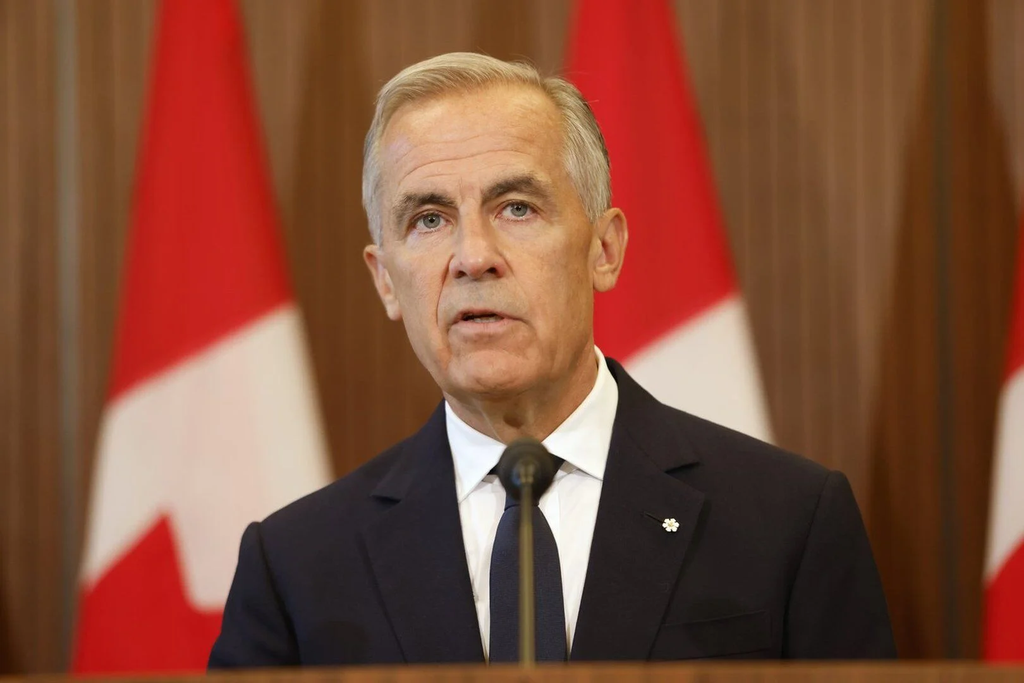
Canada is making a massive diplomatic shift. Prime Minister Mark Carney has accepted an invitation to address the European Parliament in Strasbourg this coming September. This historic move comes right on the heels of a total breakdown in trade negotiations between Ottawa and Washington.
For decades, Canada and the United States enjoyed one of the closest economic relationships in the world. Hundreds of millions of dollars in goods and services crossed the border every single day. But recent events have shattered that routine. After months of tense meetings, aggressive tariff threats, and deep disagreements over trade rules, negotiation efforts fell apart completely.
Now, Ottawa is looking across the Atlantic. Carney’s upcoming speech in Strasbourg signals a major effort toward economic diversification. Canada wants to build stronger trade, security, and technology partnerships with European nations to protect its economy from further shocks.
The decision has sparked a fierce debate both at home and abroad. While supporters view the European trip as a smart strategic maneuver, domestic critics argue the government should focus on solving immediate economic challenges at home first.
The Breakdown of Canada-U.S. Trade Negotiations
To understand why Mark Carney is traveling to Europe, it helps to look at what went wrong between Ottawa and Washington. Trade relations between Canada and the United States have reached their lowest point in decades.
The $0 Secret To Launching Your Entire Online Empire
Why pay hundreds every month for separate software? Build funnels, send emails, and make sales with Systeme.io completely free.
Get Started For $0Free Forever • No Credit Card Needed • Beginner-Friendly
Tensions began rising when Washington announced heavy new duties on Canadian goods, reaching up to 50% on select products. American officials pressed for major structural changes to existing trade agreements, demanding concessions that Canadian negotiators found impossible to accept.
How Months of Tensions Led to a Stalemate
The talks failed after months of intense discussions. American negotiators insisted on terms that targeted key sectors of the Canadian economy. Canadian leaders made it clear that while they wanted a fair deal, they would not sign an agreement that harmed Canadian workers or damaged essential domestic industries.
When negotiations finally collapsed over the weekend, Ottawa responded quickly. The Canadian government laid out a plan to retaliate with dollar-for-dollar counter-measures against billions of dollars in American products. These retaliatory measures are set to take effect in early September, marking a full-blown trade dispute between the neighboring nations.
The Red Lines: Culture, Sovereignty, and Retaliatory Tariffs
One of the biggest stumbling blocks during negotiations was cultural sovereignty. Reports indicate that U.S. negotiators pushed Canada to end special protections for French-language cultural goods and broadcasting policies. For Canadian policymakers, those protections are non-negotiable elements of national identity.
Prime Minister Carney publicly rejected the proposed U.S. terms, stating that the demands were unacceptable right from the start. He emphasized that Canada would not sacrifice its cultural independence or legislative authority to secure a quick trade deal.
With negotiations stalled, both countries are preparing for a long economic standoff. The collapse of these talks forced Canada to reconsider its heavy economic reliance on the U.S. market, setting the stage for Carney’s upcoming trip to Europe.
Strasbourg Bound: Inside Carney’s European Strategy
With North American trade negotiations frozen, European Parliament President Roberta Metsola extended an official invitation for Prime Minister Carney to address European lawmakers. Carney accepted the invitation and is scheduled to speak in Strasbourg, France, on September 16.
The visit is timed alongside another major political event. Carney will attend the European Union’s annual State of the Union address, delivered by European Commission President Ursula von der Leyen.
European officials have welcomed the visit as a clear signal that both Canada and the EU are eager to upgrade their strategic partnership. Official coverage of the announcement can be reviewed via updates from AP News and reporting from CBC News.
A High-Stakes Speech at the European Parliament
Addressing the European Parliament gives Canada a prominent platform to speak directly to lawmakers from 27 European nations. Carney is expected to outline a vision for expanded bilateral trade, joint investment in critical infrastructure, and stronger diplomatic ties.
The goal is not to replace North American trade overnight, which would be impossible given geographic realities. Instead, the goal is to open new pathways for Canadian businesses, reduce dependence on a single market, and create stable commercial relationships with partners who share similar regulatory standards.
European leaders view Canada as a reliable democratic partner. In an era of global economic uncertainty, both sides see clear advantages in working together more closely on trade, energy, and economic resilience.
Defense, Tech, and Supply Chain Security
The relationship between Canada and the EU has already been growing stronger in recent months. Canada recently became the first non-European country allowed to join the EU’s Security Action for Europe (SAFE) initiative. This defense framework provides up to 150 billion Euros in financing for joint defense procurement and industrial cooperation.
Beyond defense, Ottawa wants to deepen cooperation on green energy, critical minerals, and advanced technologies. Europe needs reliable sources of raw materials like lithium, nickel, and uranium for its green transition. Canada has vast natural reserves of these resources and wants to position itself as a key supplier for European manufacturers.
Technology is another major area of shared interest. Both Canada and Europe are investing heavily in modern infrastructure and digital innovation. Readers interested in how automation and emerging tech are reshaping modern business strategies can explore our detailed guides on technology and AI updates to see how global shifts impact everyday digital tools.
Send, Spend & Hold Money Worldwide Without Hidden Fees
Transfer money internationally at the real exchange rate and hold 40+ currencies in one account.
Open a Wise AccountMid-market rate • Fast transfers • 40+ currencies
Political Backlash at Home: The Battle Over Parliament
While Prime Minister Carney prepares for his European address, he faces sharp criticism from domestic political opponents. The decision to travel to Strasbourg while Canadian trade negotiations with the U.S. are falling apart has created a heated political debate in Ottawa.
Conservative opposition leaders argue that the prime minister should focus his immediate energy on domestic issues rather than international speeches. They have publicly questioned why the government is prioritizing European diplomacy while Canada’s own Parliament remains out of session.
Opposition Demands for an Emergency Debate
Opposition lawmakers have demanded an emergency recall of the House of Commons. They argue that elected representatives need an immediate platform to debate the trade crisis, evaluate retaliatory tariffs, and protect Canadian jobs.
Deputy Conservative Leader Melissa Lantsman criticized the government’s timing, pointing out that Parliament exists specifically to hold the executive branch accountable during major economic crises. Opposition members contend that holding a single news conference is not enough when billions of dollars in trade and tens of thousands of Canadian jobs are on the line.
Critics also point out that while Europe is an important partner, it cannot instantly absorb the massive volume of goods Canada traditionally exports to the United States. They argue that finding a resolution to North American trade friction must remain the top priority.
The Government’s Defense of Europe-First Diplomacy
The Prime Minister’s Office has defended the European trip, emphasizing that active international engagement is essential during global economic shifts. Officials argue that building stronger ties with European allies creates long-term stability and gives Canada greater leverage on the global stage.
Government spokespersons also noted that Parliament will resume its regular schedule in due course, and that diplomatic outreach abroad works hand-in-hand with domestic policy. Carney’s team maintains that taking Canada’s case directly to European lawmakers is a proactive step to safeguard the nation’s economic future.
Before heading to Europe, Carney is scheduled to attend an investor summit in Toronto. There, the federal government will make its pitch to major institutional investors, making the case that Canada remains an attractive place to deploy capital despite cross-border trade friction.
The Ripple Effect: How Global Alliances Are Shifting
The current friction between Canada and the United States reflects a broader global trend. Around the world, countries are re-evaluating traditional supply chains and trade relationships. Recent years have demonstrated that relying too heavily on a single trading partner can create significant economic vulnerabilities.
As trade barriers rise and tariff disputes become more common, nations are actively seeking to diversify their commercial partners. Canada’s outreach to Brussels is one example of how middle-power nations are forming flexible economic coalitions to protect their interests.
The $0 Secret To Launching Your Entire Online Empire
Why pay hundreds every month for separate software? Build funnels, send emails, and make sales with Systeme.io completely free.
Get Started For $0Free Forever • No Credit Card Needed • Beginner-Friendly
Diversifying Beyond the American Market
Diversification is easier said than done. Economic studies show that geography, shared infrastructure, and decades of integrated manufacturing make Canada’s economic ties to the U.S. deep and complex. Moving supply chains or opening new export markets takes time, significant capital investment, and sustained diplomatic effort.
However, even partial diversification can provide valuable insurance against economic shocks. Expanding trade agreements with the European Union under CETA (Comprehensive Economic and Trade Agreement) gives Canadian exporters broader access to a market of over 450 million consumers.
By strengthening commercial ties with Europe, Asian partners, and other global markets, Canada aims to create a more resilient economy that can better withstand political and trade policy shifts in Washington.
AI, Energy, and Modern Media in Global Trade Policy
Modern trade negotiations involve much more than just agricultural goods or manufacturing parts. Today, issues like artificial intelligence regulations, digital privacy laws, cross-border data flows, and intellectual property play a huge role in international agreements.
As governments build new economic frameworks, digital communication tools play a key role in explaining these shifts to the public. Media creators and publishers use automated platforms to track breaking news and produce educational content at scale. Anyone interested in how digital creators leverage online video channels to cover complex global topics can explore resources on YouTube automation insights.
Energy policy is another central pillar of new global trade agreements. Europe’s ongoing effort to secure clean, reliable energy aligns directly with Canada’s goal of exporting clean technology, hydrogen, and critical minerals. Collaborative projects in these areas could redefine Canada-EU relations over the coming decade.
What This Means for Everyday Citizens and Business Owners
Global trade disputes might sound like abstract political events, but their real-world consequences reach everyday consumers and small business owners quickly. Understanding these impacts can help individuals and business leaders plan ahead.
When tariffs are imposed on imported goods, manufacturing costs rise. Companies often have to pass those additional costs down to consumers, leading to higher prices on store shelves for everything from food to electronics and vehicles.
Economic Impact on Supply Chains and Prices
For Canadian businesses that export products across the border, high U.S. tariffs can make their goods less competitive compared to local options. This pressure can lead to reduced sales, lower profit margins, and potential job cuts in vulnerable sectors like manufacturing, steel, aluminum, and agriculture.
On the flip side, retaliatory tariffs on U.S. products entering Canada mean Canadian shoppers may see higher price tags on American-made items. Supply chains that rely on parts moving back and forth across the border will also face delays and increased administrative expenses.
If Canada succeeds in expanding its trade footprint in Europe, it could help offset some of these losses over time. However, building those European supply routes will take patience and capital.
Practical Steps for Businesses Navigating Trade Tensions
Business owners facing supply chain disruptions can take several practical steps to adapt to the changing landscape:
- Audit your supply chains to identify components or inventory subject to new tariff rates.
- Explore alternate sourcing options, including domestic suppliers or international partners in regions like the European Union.
- Review pricing strategies to manage rising import costs without losing your customer base.
- Monitor government policy announcements regularly to stay informed about retaliatory tariff lists and available relief programs.
- Diversify your client base so your business isn’t overly dependent on a single export market.
Frequently Asked Questions
Why is Mark Carney addressing the European Parliament?
Prime Minister Mark Carney was invited by European Parliament President Roberta Metsola to address the assembly in Strasbourg on September 16. The address is part of a diplomatic strategy to deepen economic, technology, and security ties with Europe following the breakdown of Canada-U.S. trade negotiations.
What caused the Canada-U.S. trade talks to fail?
Trade talks collapsed after months of friction over steep U.S. tariff threats and aggressive negotiating demands. Key sticking points included U.S. demands regarding Canadian cultural protections, French-language policies, and economic sovereignty issues that Canadian leaders found unacceptable.
When do Canada’s retaliatory tariffs take effect?
The Canadian government announced retaliatory tariffs targeting $27.6 billion CAD worth of U.S. products on a dollar-for-dollar basis. These countermeasures are scheduled to go into effect on September 8.
Why are opposition politicians criticizing the European trip?
Domestic critics, including Conservative opposition leaders, argue that Prime Minister Carney should recall Canada’s Parliament for an emergency debate before traveling abroad. They believe domestic trade challenges and job security should take priority over international speaking engagements.
How does Canada’s participation in European defense initiatives work?
Canada became the first non-European country permitted to participate in the EU’s Security Action for Europe (SAFE) initiative. This framework provides access to up to 150 billion Euros in joint defense procurement financing, highlighting growing security cooperation between Ottawa and Brussels.
The coming weeks will be crucial for Canada’s economic and diplomatic trajectory. As Ottawa prepares retaliatory tariffs and Carney gets ready for his Strasbourg address, all eyes will be on how European leaders respond to Canada’s outreach.
Navigating a major trade dispute with your largest trading partner is never easy, but expanding international ties is a strategic step toward long-term resilience. Whether this transatlantic pivot provides the economic stability Canada seeks remains to be seen, but it clearly marks the beginning of a new chapter in Canadian foreign policy.
To learn more about our publication and our mission to cover key global events, visit our about WhatsBuzzn page. If you have questions or media inquiries, feel free to reach us via our WhatsBuzzn contact page. You can also join the conversation and follow our daily updates across our official social channels on Instagram, Facebook, and X (formerly Twitter).
