
Lagos is a city that never stands still. From the early morning hustle of yellow buses in Ikeja to the late-night traffic on the Lekki-Epe Expressway, over twenty million people rely on the city’s roads, bridges, pipes, and power lines every single day.
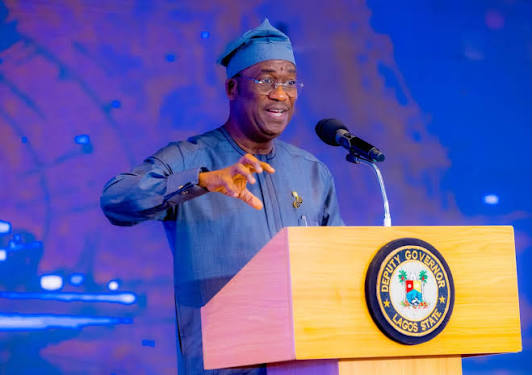
Running a megacity of this size requires an enormous amount of money. Recently, the Deputy Governor of Lagos State, Dr. Obafemi Hamzat, brought this reality straight to the public. He stated clearly that the current resources available to the Lagos State government are simply not enough to match the massive infrastructure demands of the state.
This statement was not just a passing comment. It offers an honest look at the financial struggles happening behind the scenes in Nigeria’s commercial capital. While Lagos generates more internal revenue than any other state in the country, the cost of keeping up with its booming population is growing much faster than the money coming in.
Understanding why this revenue gap exists, how it impacts daily life in the city, and what can be done about it gives clear insight into the future of Lagos.
What Did Dr. Obafemi Hamzat Actually Say?
Dr. Obafemi Hamzat raised this issue during a public engagement where he discussed the state’s long-term development plans and budget constraints. He explained that building and maintaining modern infrastructure in a coastal megacity like Lagos requires financial investments that go far beyond standard government revenue.
The $0 Secret To Launching Your Entire Online Empire
Why pay hundreds every month for separate software? Build funnels, send emails, and make sales with Systeme.io completely free.
Get Started For $0Free Forever • No Credit Card Needed • Beginner-Friendly
According to reports covered across major news outlets like Punch Newspaper and Vanguard News, the Deputy Governor emphasized that Lagos faces double the pressure of standard states. It must repair aging structures built decades ago while simultaneously constructing new ones for hundreds of thousands of new residents moving into the city every year.
The government budget, even when backed by internal tax collection and federal allocations, can only cover a fraction of the necessary capital projects. When you factor in inflation, currency fluctuations, and the high price of imported construction materials, the financial gap becomes even wider.
Dr. Hamzat pointed out that relying solely on government allocation is no longer realistic. To build the roads, sea walls, drainage channels, rail networks, and water plants Lagos needs, the state must look outside traditional budgets.
Why Is Building Infrastructure in Lagos So Expensive?
To understand why Lagos needs so much money, it helps to look at the unique geographical and population challenges of the state.
Lagos is the smallest state in Nigeria by land area, yet it holds one of the highest population densities in the world. Fitting over twenty million people into a small strip of land creates instant pressure on every public asset.
Challenging Terrain and Soil Conditions
Lagos is surrounded by water. A huge portion of the land consists of wetlands, swamps, and reclaimed coastal areas. Building a road in a dry inland area is relatively straightforward, but building a durable road in places like Lekki, Ikorodu, or Badagry requires deep sand-filling, heavy piling, and advanced drainage systems.
These extra engineering steps can easily double or triple the cost of a single kilometer of road. Without these costly techniques, heavy rains would wash the roads away in a single season.
Non-Stop Population Growth
Thousands of people move to Lagos every single week from other parts of Nigeria and West Africa in search of work, business opportunities, and safety. This continuous influx means that as soon as a new road or bus terminal opens, it is already operating at full capacity. The demand always moves faster than the supply.
High Cost of Construction Materials
Major projects require asphalt, steel, heavy machinery, specialized labor, and electronic systems for traffic control. Many of these supplies or their raw components are tied to global market prices. As material costs rise worldwide, the real purchasing power of the state budget shrinks.
Major Infrastructure Pressure Points in Lagos
When the Deputy Governor speaks about inadequate resources, he is referring to several urgent sectors that require immediate funding.
1. Roads and Bridges
Traffic congestion in Lagos is legendary, but it is also a huge drain on the local economy. Hours spent sitting in gridlock translate directly into lost business hours and wasted fuel. Main routes like the Lagos-Badagry Expressway, the Lekki-Epe corridor, and inner routes in Agege or Ikorodu need continuous expansion and resurfacing. Existing bridges also require expensive structural maintenance to remain safe for heavy commercial trucks.
2. Drainage Systems and Flood Control
Because Lagos sits at sea level, heavy rainfall during the wet season causes flash floods that paralyze movement and damage property. Building massive underground drainage channels, concrete canals, and coastal defenses to protect communities from rising sea levels costs billions of Naira every year.
3. Mass Transit and Rail Projects
The Lagos State Government has made noticeable progress with public transport initiatives like the Blue Line and Red Line electric rail projects, alongside expanding the Bus Rapid Transit (BRT) fleet. However, building rail tracks, importing train cars, constructing modern stations, and securing stable electricity supply for electric trains require multi-billion-dollar investments that stretch state finances to the limit.
4. Clean Water and Waste Management
Access to clean piped water remains a challenge for millions of residents, forcing many to rely on private boreholes or local vendors. Furthermore, a city of over twenty million people produces thousands of tons of waste daily. Building modern water treatment plants and recycling facilities demands long-term capital that the state budget cannot easily supply on its own.
How Technology and Smart Tools Can Help Stretch Limited Funds
Since government funds are tight, Lagos State must find smarter ways to do more with less. This is where modern technology and digital tools come into play.
Send, Spend & Hold Money Worldwide Without Hidden Fees
Transfer money internationally at the real exchange rate and hold 40+ currencies in one account.
Open a Wise AccountMid-market rate • Fast transfers • 40+ currencies
By adopting digital solutions, the state can monitor public assets, track project progress in real-time, and reduce costly construction delays. For instance, using satellite imagery and drone technology allows urban planners to map out drainage channels and road layout issues before spending money on manual surveys.
Smart traffic management systems equipped with automated cameras can help optimize traffic flow at busy intersections, reducing the wear and tear caused by idling vehicles. Digital tax collection systems also ensure that government revenue is collected efficiently without leaking away through manual paperwork.
To stay updated on how new tech tools are reshaping business and government infrastructure around the world, check out our dedicated Technology & AI news section.
Alternative Solutions: Public-Private Partnerships and Investment
Since taxpayers’ money cannot cover every project, the Lagos State Government is actively leaning on Public-Private Partnerships (PPPs).
Under a PPP model, private companies use their own money to build major roads, bridges, or transport terminals. In return, the government allows them to operate these facilities for a set number of years to recover their investment before handing them back to the state.
Projects like the Lekki-Ikoyi Link Bridge and major commercial terminals were built using private capital models. Encouraging private investors to take over large-scale projects frees up public tax revenue for basic essential services like primary healthcare and basic education.
The Rise of the Digital Economy
As physical infrastructure faces resource limitations, many young Lagosians are turning to the digital space to generate income and build independent careers. The online economy offers opportunities that do not rely on local roads or physical store fronts.
Many content creators and digital entrepreneurs are tapping into platforms like YouTube to reach global audiences and bring foreign currency back into the local economy. If you want to explore how people are building hands-free online channels to earn extra income, take a look at our complete guide to YouTube Automation strategies.
What This Resource Shortage Means for Everyday Residents
When government budgets fall short of real-world needs, the effects touch everyone living and working in Lagos.
Increased Cost of Doing Business
Small business owners often have to supply their own basic services. A restaurant or light manufacturing workshop in Lagos might need to buy its own power generator, dig a water borehole, and pay private waste collectors. These extra operational costs make products more expensive for consumers.
The $0 Secret To Launching Your Entire Online Empire
Why pay hundreds every month for separate software? Build funnels, send emails, and make sales with Systeme.io completely free.
Get Started For $0Free Forever • No Credit Card Needed • Beginner-Friendly
Higher Commute Times
When road repairs are delayed due to funding shortages, traffic jams worsen. This increases daily commute times, raises transport fares, and adds physical stress to workers moving across the city every morning and evening.
Opportunity for Community Action and Innovation
On the positive side, these challenges are driving local communities, property development associations, and private businesses to step up. Many neighborhood associations are taking the initiative to grade local inner roads, install solar streetlights, and manage local security through private contributions.
What Needs to Happen Going Forward?
Overcoming the infrastructure funding gap in Lagos will take time, careful planning, and fresh financial strategies. Here are the key steps experts suggest for moving forward:
- Expanding Federal Government Support: Given that Lagos serves as Nigeria’s main economic hub and handles the bulk of the country’s sea and air trade, advocates argue that the federal government should allocate a special financial status or extra infrastructure funds to the state.
- Issuing Infrastructure Bonds: Long-term infrastructure bonds allow governments to raise funds from institutional investors, pension funds, and the general public specifically dedicated to major road and rail projects.
- Improving Regional Integration: Working closely with neighboring Ogun State can help decentralize Lagos. Building better transport links to surrounding areas encourages people to live outside the heavily congested center while still working or doing business easily.
- Encouraging Green and Sustainable Construction: Using durable, locally sourced materials and eco-friendly design concepts can lower long-term maintenance costs for roads and public buildings.
Frequently Asked Questions (FAQs)
Why is Lagos State short of infrastructure funds despite generating high revenue?
While Lagos generates more internal revenue than other Nigerian states, its population is massive and growing rapidly. The sheer cost of building complex marine engineering projects, maintaining roads in marshy terrain, and managing huge daily transport demands far exceeds the available yearly budget.
What is a Public-Private Partnership (PPP) and how does it help?
A Public-Private Partnership is an agreement where private companies fund, build, and temporarily operate public assets like roads, bridges, or energy plants. This helps the government deliver necessary infrastructure quickly without putting the entire financial burden on taxpayers.
Will ongoing projects like the Red and Blue Line trains be stopped?
No, major flagship projects that are already funded through specialized bonds, international development loans, or strategic partnerships will continue. Dr. Hamzat’s statement focuses on the overall future gap between what the city urgently needs and what current budgets can cover.
How can small business owners cope with infrastructure challenges in Lagos?
Small business owners can adapt by exploring hybrid or work-from-home models where possible, leveraging digital sales channels, using alternative power sources like solar, and joining local trade associations to share logistics and delivery costs.
Dr. Obafemi Hamzat’s open assessment of Lagos’s resource gap is a realistic look at the scale of the challenge facing one of Africa’s largest cities. Acknowledging that government funds are insufficient is an important first step toward inviting private capital, adopting smarter technologies, and building stronger partnerships to keep the city moving forward.
At WhatsBuzzN, we are dedicated to bringing you simple, clear, and relevant updates on politics, business trends, digital growth, and urban life. To learn more about our mission and the team behind our stories, feel free to visit our About Us page.
Have questions, feedback, or a story tip you would like to share with us? Reach out directly through our Contact Us page.
Stay connected with us across social media for daily updates, trending news, and viral stories:
Join the conversation on X (formerly Twitter)
Follow us on Instagram
Connect with us on Facebook
