
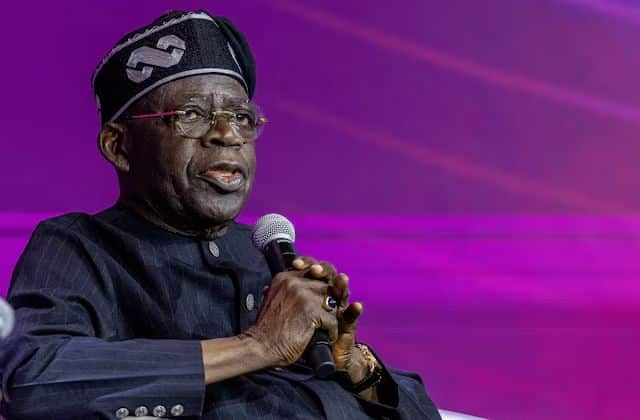
The political climate in Nigeria is beginning to stir as political leaders look ahead to the 2027 general elections. Even though election day is still ahead, top opposition figures from various political parties are already meeting behind closed doors. Their main objective is straightforward: they want to build a united mega party or a strong political alliance capable of challenging President Bola Ahmed Tinubu and the ruling All Progressives Congress (APC).
Prominent figures such as former Vice President Atiku Abubakar, former Anambra State Governor Peter Obi, and Oyo State Governor Seyi Makinde are at the center of these strategic conversations. They are joined by other well-known political leaders who believe that running separately will simply give the ruling party another easy path to victory in 2027.
At WhatsBuzzn, we keep a close eye on major news events and political developments that shape our world. In this article, we break down what is happening behind the scenes, why these opposition leaders are trying to team up, the big obstacles standing in their way, and what this all means for the average Nigerian voter.
Why Nigerian Opposition Leaders Want a Mega Coalition
In politics, numbers matter more than anything else. The main motivation driving these alliance talks is the harsh lesson opposition leaders learned during the 2023 presidential election.
During that election cycle, the opposition went into the race completely divided. Atiku Abubakar contested under the People’s Democratic Party (PDP), Peter Obi ran on the platform of the Labour Party (LP), and Rabiu Musa Kwankwaso represented the New Nigeria Peoples Party (NNPP).
The $0 Secret To Launching Your Entire Online Empire
Why pay hundreds every month for separate software? Build funnels, send emails, and make sales with Systeme.io completely free.
Get Started For $0Free Forever • No Credit Card Needed • Beginner-Friendly
When you add up the total votes gathered by these three major opposition candidates in 2023, they polled over 13 million votes combined. Meanwhile, Bola Ahmed Tinubu won the presidency with roughly 8.7 million votes. Because the opposition split their support across multiple platforms, the ruling party was able to win the election with a minority of the overall votes cast.
Opposition leaders now recognize that repeating that exact same mistake in 2027 will almost certainly guarantee another victory for the APC. Political analysts across the country, as noted in reports by major outlets like Africa Confidential and News Central Africa, agree that an opposition alliance is not just an option—it is necessary if they want to present a serious challenge to the government in power.
History also shows that this strategy can work in Nigerian politics. Back in 2013, four main opposition parties decided to merge and create the APC. That historic union eventually went on to defeat an incumbent president in 2015. Atiku, Obi, Makinde, and their allies are hoping to recreate that exact same political blueprint for 2027.
Who is Involved in the Opposition Talks?
Building a mega coalition requires getting political heavyweights from different regions and political backgrounds to agree on a shared goal. Several major figures are actively involved in these discussions.
Atiku Abubakar and the PDP Connection
Atiku Abubakar, who was the PDP presidential candidate in the last election, has been one of the most vocal champions of opposition unity. He has publicly stated that he is open to supporting a single consensus candidate if it helps preserve democratic competition and offers Nigerians a strong alternative.
Atiku brings decades of political experience, an extensive national network, and deep resources to the table. However, he also faces ongoing questions about his age and whether he will be willing to step aside for a younger candidate when final decisions are made.
Peter Obi and the Youth Movement
Peter Obi changed the dynamic of Nigerian elections in 2023 by building a massive political movement driven largely by young voters. His supporters, popularizing the “Obidient” movement, brought unprecedented energy and participation to the election.
Obi has continued to hold consultations with leaders across party lines, including meetings with Atiku, former Kaduna State Governor Nasir El-Rufai, and leaders of smaller political parties like the African Democratic Congress (ADC). Obi’s biggest strength is his popularity among young people and urban voters, but his followers are deeply committed to seeing him lead the ticket rather than taking a second-place running mate slot.
Seyi Makinde and the Strategic South-West Link
Oyo State Governor Seyi Makinde represents an important strategic bridge in this coalition effort. As one of the most visible PDP governors in the country, Makinde holds substantial influence in the South-West region.
Makinde has shown an ability to navigate complex political terrain. While maintaining his position within the PDP, he has also been building cross-party relationships and exploring political alignments that support long-term stability. His involvement gives any prospective coalition strategic leverage in the South-West, a region where President Tinubu has traditionally held strong political support.
Other Heavyweights on the Board
The consultation process extends beyond Atiku, Obi, and Makinde. Other key figures are actively participating in talks or being courted by opposition strategists:
- Rabiu Musa Kwankwaso: The leader of the NNPP commands a massive and loyal voting block in Kano State and parts of northern Nigeria.
- Nasir El-Rufai: The former Governor of Kaduna State has been holding high-profile political meetings, leading to widespread speculation about his role in the emerging alignment.
- Rotimi Amaechi: The former Minister of Transportation and former Governor of Rivers State remains a notable political figure in South-South politics.
Major Obstacles Standing in the Way of a Coalition
While the idea of uniting against a common political opponent sounds simple in theory, building a working coalition is difficult in practice. History shows that opposition alliances frequently run into serious internal challenges long before election day arrives.
The Ego Problem and the One-Ticket Dilemma
The biggest roadblock facing any political merger is simple: only one name can appear at the top of the presidential ballot paper.
Atiku Abubakar, Peter Obi, Seyi Makinde, and Rabiu Kwankwaso all have millions of supporters who believe their leader is best suited to lead the country. Asking any of these top figures to step down and take a supporting role requires significant compromise.
If supporters feel their candidate was unfairly sidelined during negotiations, they may choose not to vote for the unified ticket, which would defeat the purpose of forming the coalition in the first place.
Send, Spend & Hold Money Worldwide Without Hidden Fees
Transfer money internationally at the real exchange rate and hold 40+ currencies in one account.
Open a Wise AccountMid-market rate • Fast transfers • 40+ currencies
Internal Crises in Opposition Parties
Before opposition parties can successfully merge with others, they must first resolve internal disputes within their own organizations.
The PDP has dealt with leadership friction, factional debates, and disagreements among its governors since the last election cycle. These internal distractions make it hard for the party to negotiate with external partners with a single, unified voice.
At the same time, the Labour Party has experienced legal disputes and leadership conflicts over control of its party structure. Resolving these internal party issues is a necessary first step before any formal merger can be finalized.
The North vs. South Zoning Debate
Power rotation remains a delicate topic in Nigerian politics. Traditional political understandings suggest that leadership should alternate between the northern and southern regions of the country.
Given that President Tinubu is from the South, some political strategists argue that the opposition must field a candidate from the North to capture votes across northern states. Others argue that candidates from the South-East or South-West deserve a fair opportunity. Resolving this regional debate without alienating major voting blocs is a major challenge for coalition organizers.
The Power of Incumbency and APC’s Strategy
President Bola Ahmed Tinubu and the ruling APC are actively watching these opposition developments. The ruling party holds the advantage of incumbency, broad party structures, and deep political experience.
The APC has continually worked to bring influential political figures, former governors, and lawmakers from opposition parties into its fold. By strengthening its own ranks and building key partnerships across different geopolitical zones, the APC aims to maintain its strong electoral position heading into 2027.
How Digital Media, AI, and Online Campaigns Will Shape 2027
Modern political campaigns are no longer fought only at physical rallies and on traditional television stations. The 2027 presidential race will be heavily influenced by what happens on smartphones, social media platforms, and digital communication channels.
Younger voters in Nigeria rely heavily on online platforms to consume news, express opinions, and evaluate political candidates. Social media played a major role in organizing voters, spreading campaign messages, and tracking election information during the previous cycle.
As discussed in our articles on Technology & AI, digital tools and advanced technology are changing how political information is created and distributed. Candidates in 2027 will likely rely on data analysis, targeted digital messaging, and automated campaign tools to reach voters across the country.
The $0 Secret To Launching Your Entire Online Empire
Why pay hundreds every month for separate software? Build funnels, send emails, and make sales with Systeme.io completely free.
Get Started For $0Free Forever • No Credit Card Needed • Beginner-Friendly
Furthermore, online video platforms and video distribution strategies—similar to the concepts covered in our section on YouTube Automation—are becoming primary channels for political commentary and news updates. Whichever political movement manages its digital strategy most effectively will have a strong advantage in reaching voters and shaping public discussion.
What This Means for Everyday Nigerians
For the average citizen, political alliances and coalition discussions might seem like high-level strategy among political elites. However, these developments directly affect everyday life across the nation.
A functional, organized opposition is important for a healthy democratic system. When opposition parties are divided or weak, the government in power faces less pressure to deliver on economic promises, address security concerns, or manage the cost of living.
Conversely, when a credible and organized opposition exists, it encourages the ruling government to stay accountable, listen to public concerns, and focus on delivering visible results. Whether the proposed coalition succeeds or fails, the ongoing talks force governance and political performance into the public spotlight.
Voters should look beyond party names and political speeches. The most important question for every citizen is whether any political alliance offers realistic solutions to economic challenges, security issues, infrastructure development, and job creation.
Frequently Asked Questions (FAQs)
Can Atiku, Obi, and Makinde legally form a new political party before 2027?
Yes. Under Nigerian electoral laws, political parties can choose to merge into a single registered entity, or distinct parties can form a political alliance. Alternatively, leaders can register a new political platform with the Independent National Electoral Commission (INEC), provided all legal criteria are met well ahead of the election.
Who is most likely to lead an opposition coalition ticket in 2027?
It is too early to determine a clear frontrunner. Atiku Abubakar possesses established national structures, Peter Obi retains strong support among young voters, and Seyi Makinde provides regional influence and executive governance experience. The ultimate selection will depend on internal party negotiations, political compromises, and regional zoning considerations.
What happens if the opposition fails to agree on a single candidate?
If opposition leaders cannot agree on a single consensus candidate and end up running on separate party tickets, they risk splitting the opposition vote once again. This division makes it significantly easier for the ruling party to maintain its majority and secure victory in the presidential election.
Is President Tinubu eligible to run for re-election in 2027?
Yes. Under the Constitution of the Federal Republic of Nigeria, an elected President is permitted to serve up to two four-year terms. President Bola Ahmed Tinubu is constitutionally eligible to seek a second term in office in 2027.
How can young Nigerians stay involved in the political process?
Young citizens can participate by registering to vote, collecting their Permanent Voter Cards (PVCs), staying informed through reliable news sources, engaging in constructive community discussions, and voting on election day.
The journey toward the 2027 general elections is shaping up to be dynamic and closely watched. As Atiku Abubakar, Peter Obi, Seyi Makinde, and other opposition leaders continue their consultations, the political map of Nigeria will continue to evolve. Whether they succeed in building a unified front or end up running on separate tickets, their choices will play a major role in shaping the country’s democratic future.
What are your thoughts on these opposition alliance moves? Do you believe a united front can challenge the ruling party in 2027, or will internal differences make a merger difficult? Share your perspective with us through our Contact Page or join the discussion with our community on Facebook, Instagram, and X (Twitter).
