

More and more writers are stepping away from traditional newsrooms and taking their work directly to readers. The best part? You can make a real living doing it. But the first big decision is where to host your newsletter.
The platform you pick shapes everything. It determines how much of your earnings you keep, how much control you have over your work, and how easy it is to grow your audience. Here’s a straightforward look at the best-paid newsletter platforms in 2025.
Why Use a Dedicated Newsletter Platform?
General email tools like Mailchimp are fine for selling products, but they aren’t built for paid newsletters. Dedicated platforms are designed from the ground up for writers. They handle subscriptions automatically, manage paywalls, and process payments.
More importantly, you own your audience. Your readers are on your list, not locked inside a social media algorithm. Even with a relatively small group of loyal readers, you can build a sustainable income through paid subscriptions, sponsorships, or other revenue streams.
The newsletter model has grown rapidly, with platforms like Substack reaching five million paid subscriptions and competitors like Beehiiv seeing explosive growth.
The Best Paid Newsletter Platforms for Writers
Here are the leading options in 2025, broken down by what they do best.
Substack – Best for Beginners and Built‑In Discovery
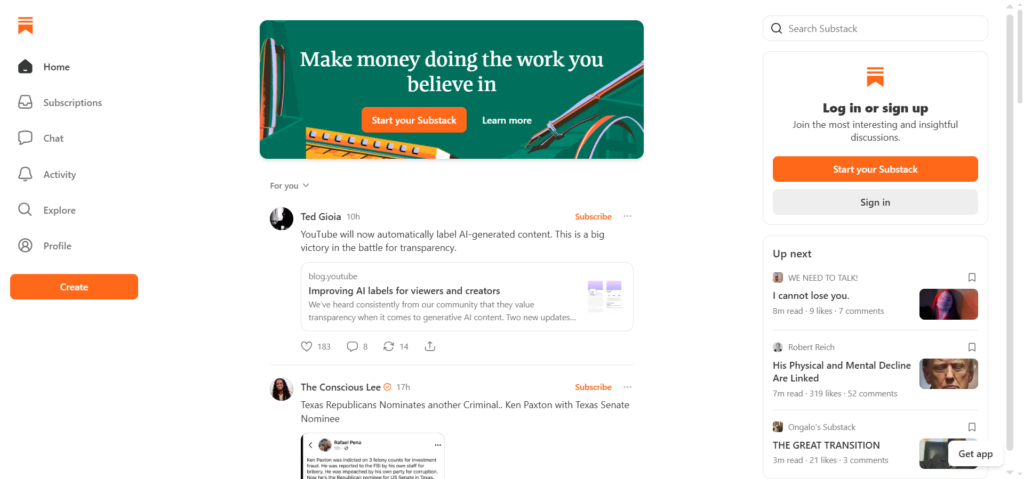
Substack is the biggest name in paid newsletters for a reason. It hosts more than half a million publications across news, politics, tech, and culture. You can set up an account in minutes and start writing for free.
The platform keeps things incredibly simple. You write, you hit send, and Substack handles everything else. If you decide to charge for your work, Substack takes a 10% cut of your subscription revenue.
That’s higher than some competitors’, but you get access to Substack’s built‑in recommendation network. Established writers can recommend your newsletter to their audiences, which helps you find new subscribers without spending money on ads.
Substack is best if you want to start fast, you don’t need advanced features, and you want to benefit from a built‑in discovery engine.
Ghost – Best for Full Control and Customization
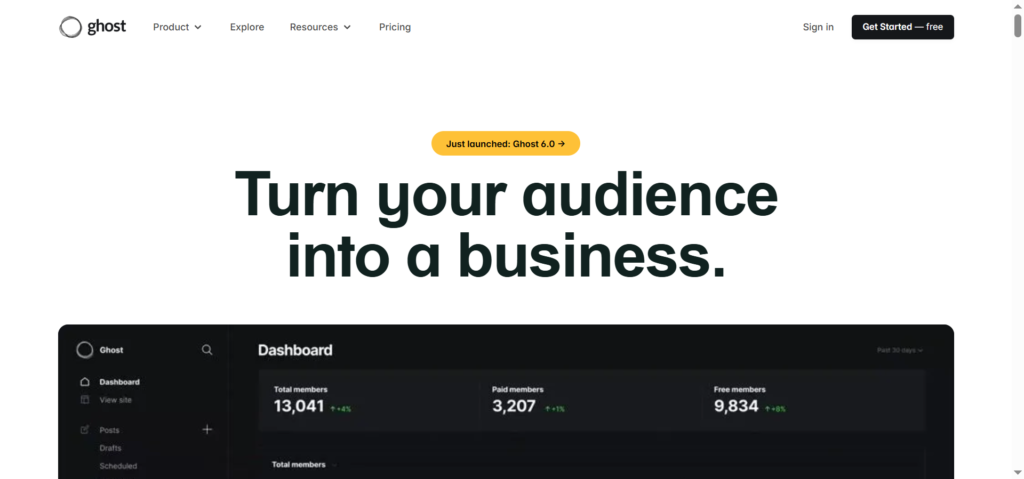
Ghost is completely different. It’s open‑source software that you can self‑host, or you can use Ghost Pro, their managed hosting service. Ghost Pro starts at 15 per month for the Starter plan, $ 29 for the Publisher plan, and $199 for the Business plan.
Unlike Substack, Ghost doesn’t take a percentage of your earnings. You keep everything minus standard payment processing fees. This alone can save you thousands of dollars as your newsletter grows.
The trade‑off is complexity. Ghost gives you enormous flexibility to design your site, set up membership tiers, and integrate other tools, but it requires some technical comfort or a willingness to learn.
Ghost is best if you want total ownership of your work, you plan to scale significantly, and you don’t mind handling a bit more setup yourself.
Beehiiv – Best for Rapid Growth and Monetization Tools
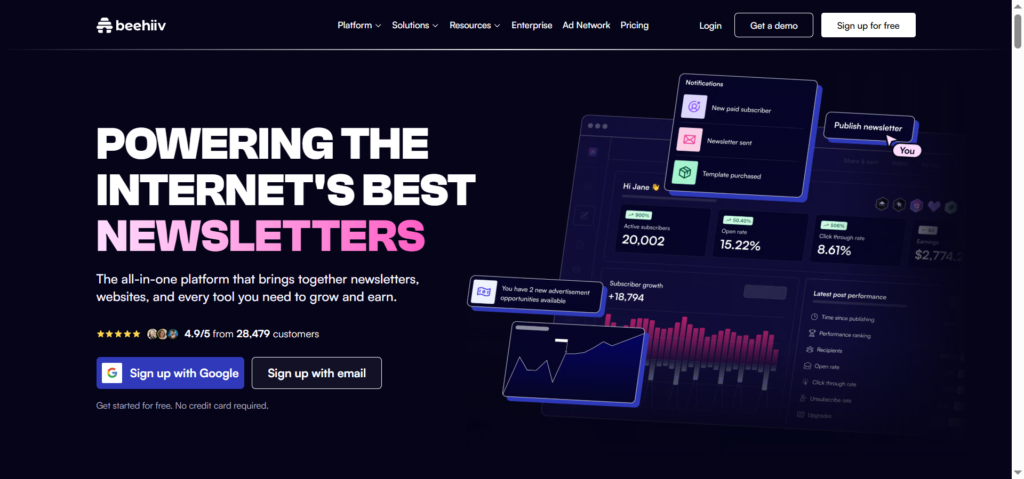
Beehiiv was built by the team behind Morning Brew, a hugely successful business newsletter. They designed the platform specifically for growth. Beehiiv offers a free plan for up to 2,500 subscribers, a Scale plan starting at $49 per month, and a Max plan at $109 per month.
The standout feature is the built‑in ad network. Beehiiv helps match you with sponsors, and you can start earning money from your free newsletter before you have a huge paid following.
The referral and recommendation tools also make it easier to grow through word of mouth. Beehiiv has grown to over 140,000 newsletters and nearly doubled its revenue to $28 million.
Beehiiv is best if you want aggressive growth tools, you like the idea of earning from both paid subs and ads, and you want a platform that feels modern and well‑designed.
Kit (formerly ConvertKit) – Best for Advanced Email Marketing
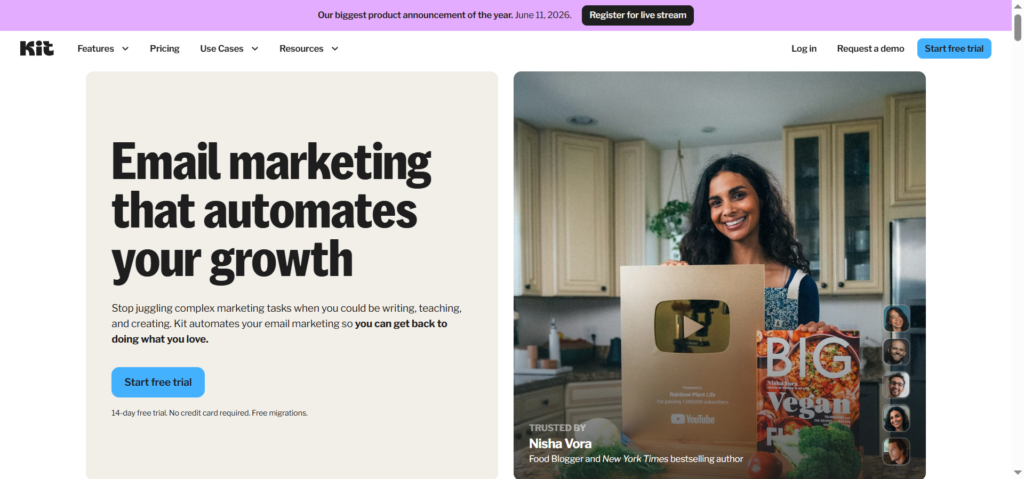
Kit is a favorite among creators who sell multiple products. It started as an email marketing tool but has added excellent paid newsletter features.
The free plan supports up to 10,000 subscribers, and paid plans start at around $29 per month for 1,000 subscribers, scaling up to $119 for 10,000 subscribers.
Where Kit shines is in automation and segmentation. You can tag subscribers based on what they click, send different content to different groups, and set up complex sequences that feel personal.
Kit also integrates seamlessly with course platforms and digital product sellers. The transaction fee for paid newsletters is 3.5% plus $0.30 per transaction.
Kit is best if you already sell other products (courses, coaching, digital downloads), you love email automation, and you want to grow beyond just a newsletter.
Buttondown – Best for Simplicity and No Extra Fees
Button-down is the minimalist’s choice. It offers a free plan for up to 1,000 subscribers, a $9 per month basic plan, and a $29 per month standard plan. The platform is intentionally simple. There are no fancy drag‑and‑drop editors, just a clean writing experience that delivers your words directly to your readers.
The biggest selling point? Buttondown does not take a cut of your subscription revenue. You set your price, and you keep it all. The platform also lets readers name their own price if you want to offer that flexibility.
Buttondown is best if you want no‑nonsense software, you dislike clutter and complexity, and you want to keep every dollar you earn from paid subscriptions.
Noosphere – Best for Journalists Who Want a Bundle Model
Noosphere is a newer player designed specifically for journalists. It launched in beta with a mobile news app that bundles independent journalists together. Readers pay a single subscription of $14.99 per month and get access to all the journalists on the platform.
Journalists keep 50% of the revenue from every subscription they bring in. The platform aims to solve the isolation problem of independent journalism. Instead of selling your own newsletter to your own audience, you join a curated network of trusted reporters.
Noosphere is best if you are a journalist who wants the safety of a bundle model, you prefer not to handle all the business side yourself, and you believe in collaborative approaches to independent news.
Frequently Asked Questions
Can I move my newsletter to a different platform later?
Yes, but it takes work. Most platforms let you export your subscriber list, but you lose the history of past posts and your paywall setup. Plan your migration during a quiet period if you ever need to switch.
How much money can I realistically make?
That depends entirely on your audience and your pricing. A writer with 1,000 paid subscribers at 8permonthearnsaround8,000 in monthly revenue before platform fees. Many successful newsletters earn less, but they also earn meaningful side income. The key is delivering unique value that readers cannot find elsewhere.
Do I need to pay for a plan immediately?
No. Substack, Beehiiv, and Kit all have generous free tiers. You can build your audience and only start paying when you decide to charge for your newsletter or when you exceed free tier limits.
What about legal and tax issues?
You are running a small business. Keep track of your income, pay estimated taxes if required in your country, and understand that platform fees are generally tax‑deductible business expenses. Consult a local professional for specific advice.
What’s Your Next Step?
The easiest way to overthink this is to compare feature lists for weeks. The better approach is to pick one platform, write your first issue, and send it to a handful of friends and family. You will learn more from that single send than from a month of research.
Which platform caught your attention first? Drop a comment below with your choice and why it fits your style.
How to Choose the Right Platform for You
Start with your own priorities. Do you want to start quickly without worrying about technical setup? Substack is the obvious choice. Do you want maximum control and the lowest fees long-term? Ghost is hard to beat.
Consider where your audience is today. If you already have a large email list and you sell multiple products, Kit gives you the most flexibility. If you are starting from zero and you want help finding new readers, Substack’s recommendation network is valuable.
Think about how you want to earn money. If you only want paid subscriptions, any of these platforms work. But if you also want to earn from ads, Beehiiv’s built‑in ad network is unique. If you want readers to name their own price, Buttondown is the only platform that truly supports that.
Test before you commit. Almost every platform offers a free tier or a free trial. Send a few issues, experiment with the editor, and see what feels right. The best platform is the one you will actually use consistently.
