
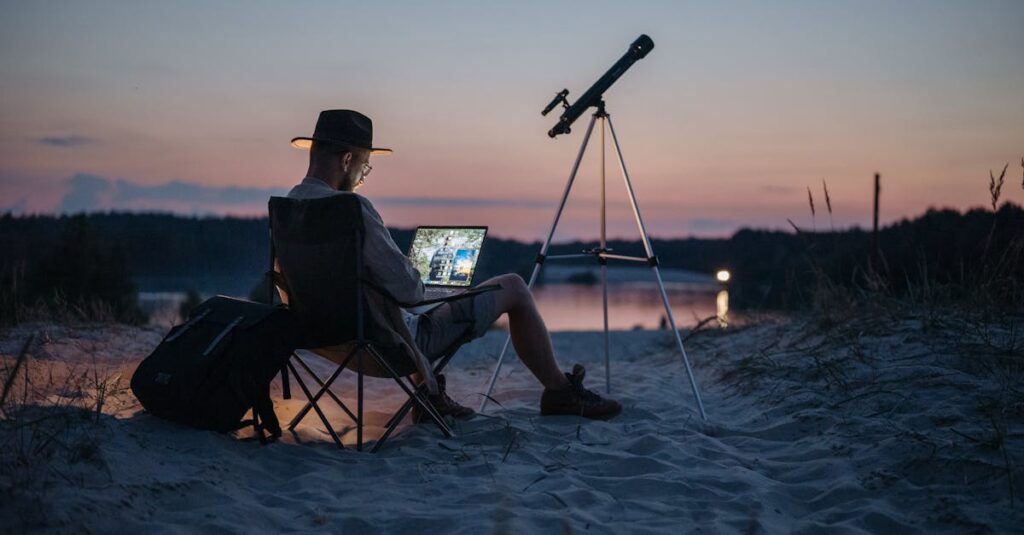
You’ve seen the photos. A laptop on a beach, a cocktail in hand, and a stunning sunset in the background. It looks like the ultimate freedom. But if you have been working online for a while—building your own business, freelancing, or running an eCommerce store—you know that the reality of remote work is often just you, your screen, and a never-ending to-do list.
The difference now is that you don’t actually have to be stuck in your home office to do it.
With the right systems in place, you can take your income on the road. But here is the truth that the photos don’t show you: Location independence is not a vacation. It is a lifestyle that requires serious planning, especially if you are the one responsible for keeping the business running.
If you have been feeling the pull to trade your regular coffee shop for one in a different time zone, here is exactly how to plan and execute this transition without losing your mind—or your monthly income.
1. The Foundation is Financial, Not Geographical
Before you even open a map to look at cheap flights, you need to look at your bank account and your business model.
A lot of people make the mistake of thinking the digital nomad life will be cheaper. Sometimes it is, but sometimes it isn’t. The real goal isn’t just to travel; it’s to have your income stay stable while you do it.
The “Trial Run” Test:
If you work from a café in your hometown for a week, does your business suffer because the Wi-Fi cuts out? Do you get distracted easily? If you can’t handle working from a coffee shop ten minutes from your house, you probably aren’t ready for a hostel in Thailand.
Start by building a buffer.
- The Savings Goal: Aim for at least three to six months of living expenses saved up. This is your safety net. If a client doesn’t pay on time or you have an emergency abroad, this fund keeps you afloat.
- Stable Income: The best time to become a nomad is when your income is mostly passive or when you have long-term retainers with clients. If you are chasing new leads every single day just to eat, adding a 12-hour time zone difference will make it much harder.
2. Make Your Business Truly Portable
If you run an eCommerce store, can you fulfill orders from abroad? If you are a consultant, can you take calls at 2 AM your local time?
Before you leave, audit your business operations.
- Automate what you can: Use tools to schedule social media. Use email sequences to nurture your leads. If you sell physical products, consider a fulfillment service so you aren’t shipping boxes from your apartment.
- The Tech Stack: You need reliable tools. A good VPN (Virtual Private Network) is non-negotiable for security on public Wi-Fi. You also need a good cloud storage system so your files are with you everywhere.
- Communication Rules: Set boundaries now. Tell your clients or customers that you will be traveling. Don’t make it a big deal. Just let them know you are available, but clarify your hours. If they expect an instant reply at 3 PM their time, and you are asleep, they will get frustrated. Set expectations early.
3. Choose Your First Location Wisely
Don’t try to conquer the world in one month. The biggest mistake first-time nomads make is moving too fast. They try to see five countries in three weeks and end up burned out, behind on work, and miserable.
For your first move, think slow travel.
- The Time Zone Factor: Can you work with a 5-hour difference? Probably. Can you work with a 12-hour difference? Only if your business is fully automated. Pick a place where you can overlap with your clients or team for at least a few hours a day.
- The Digital Infrastructure: Check the visa rules. Check the internet speed. Look for coliving spaces or cafes known for good Wi-Fi. A beautiful beach is useless if you can’t load your admin dashboard.
- The “Soft Landing”: Consider going somewhere with an established nomad community. Places like Medellín, Lisbon, or Chiang Mai are popular for a reason. It is easier to adjust when you are surrounded by people doing the same thing.
4. The Rhythm of Work vs. Travel
This is the part that breaks most people. You fly to a new city. It is exciting. You want to explore. But the work is still there.
If you aren’t disciplined, you will end up in one of two traps:
- The Vacation Mode Trap: You play all day, tell yourself you will work at night, and then fall behind. Your income drops.
- The Hotel Room Trap: You are too scared to go out because you are worried about work, so you just sit in your Airbnb and work 60 hours a week. You might as well be at home.
The solution is structure.
Treat your work hours like a job. Block out specific times for deep work. Once those hours are done, shut the laptop and go see the place you traveled to see.
You aren’t a tourist; you are a resident who works. You have to find the balance between hitting deadlines and exploring ruins. It takes practice, but once you find that rhythm, it works.
5. The Logistics That Keep You Sane
Nobody talks about the boring stuff, but the boring stuff is what keeps you on the road.
- Mail and Addresses: You likely need a home address for your bank and your business registration. Use a mail forwarding service or a family member’s address.
- Banking: Make sure you have a credit card with no foreign transaction fees. Have at least two cards with you in case one gets lost or frozen.
- Health Insurance: Do not skip this. Regular travel insurance is often not enough if you are staying long-term. Look into health insurance plans specifically for nomads or expats.
FAQs
Isn’t it lonely?
It can be, especially if you are an introvert. But the nomad community is surprisingly tight-knit. If you stay in coliving spaces or go to local nomad meetups, you will make friends faster than you do back home because everyone is in the same boat.
What about visas? Can I really just work from anywhere?
Legally, it is a gray area. You usually can’t work on a tourist visa for a local company. However, many countries are now creating specific “Digital Nomad Visas” because they want your money. Research the visa rules for your specific country and destination before you book a flight.
What if the Wi-Fi goes down?
Always have a backup plan. Know where the nearest café with good Wi-Fi is. Have a local SIM card with a decent data plan that you can hotspot from. If your entire business relies on a stable connection, you need to budget for a backup internet source.
The Reality Check
The digital nomad lifestyle is not an escape from work. It is a redefinition of your environment. You trade the stability of a fixed location for the freedom of movement.
Some days, you will close your laptop and walk onto a beach at sunset. Other days, you will be stressed because you can’t find a power outlet and the coffee is terrible.
But if you plan the business part first—if you make your income stable and your systems strong—the lifestyle part becomes sustainable.
You don’t need to have it all figured out tomorrow. You just need to take the first step.
So, here is the question I want to leave you with: If the Wi-Fi and the time zones were taken care of, where in the world would you want to open your laptop next Monday morning?
